When photographers talk about the future of cameras, the conversation usually starts with sensors, processors, or AI-powered features.
But quietly — almost invisibly — another revolution is unfolding. One that doesn’t sit behind the mount, but in front of it.
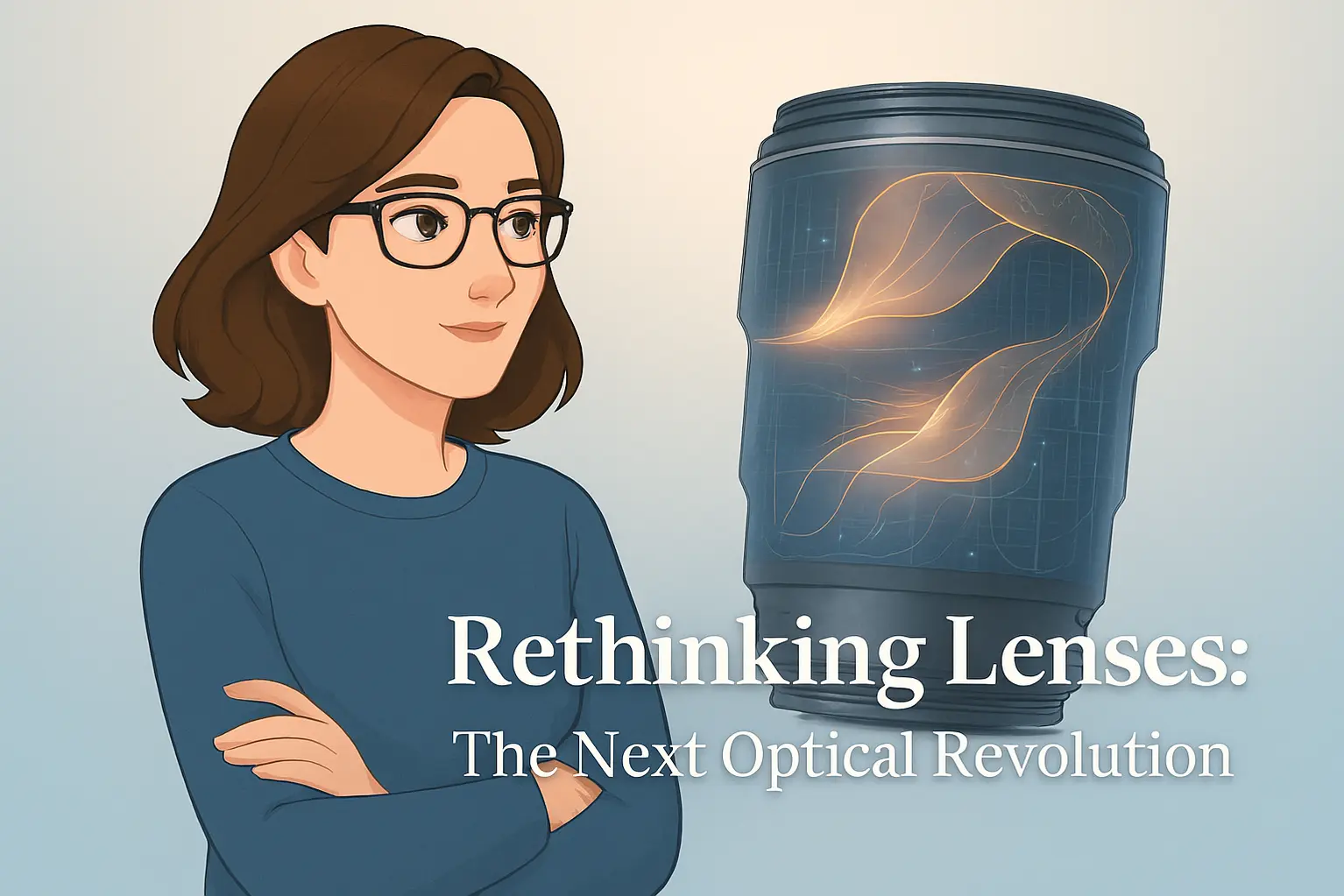
Camera lenses are no longer just passive pieces of glass designed to resolve light as cleanly as possible. The next generation of optics is becoming adaptive, computational, and in some cases, intelligent.
Folded optics that rethink physical lens design. Liquid elements that change shape instead of relying on mechanical movement. And AI-assisted “smart glass” concepts that actively collaborate with the camera system — before the image even reaches the sensor.
In this Daisy Looks Ahead chapter, we’re stepping away from product cycles and spec sheets to look at a deeper question:
What happens when lenses stop being static tools — and start becoming part of the camera’s decision-making process?
Most photographers upgrade bodies every few years — but keep lenses for decades.
That’s why understanding where lens technology is heading matters more than ever. The glass you choose today may need to live in a very different future tomorrow.
Why Traditional Lens Design Is Reaching Its Limits
For more than a century, lens design has followed the same fundamental rules: add more glass, refine optical formulas, and rely on mechanical movement to achieve focus, zoom, and stabilization.
This approach has delivered incredible image quality — but it’s also hitting physical and practical limits.
Modern mirrorless systems demand lenses that are smaller, lighter, faster to respond, and better integrated with increasingly intelligent camera bodies. At the same time, photographers expect higher sharpness, better edge performance, and improved low-light behavior.
The result is a growing tension between optical perfection and real-world usability.
This pressure is exactly why manufacturers are now exploring radical alternatives: designs that rethink how light travels inside a lens, and how optics interact with software and AI.
Folded Optics: Rethinking Lens Size and Shape
Folded optics challenge one of the most basic assumptions in photography: that light must travel in a straight line from front element to sensor.
By using prisms or mirrors to bend the light path internally, folded optical designs allow manufacturers to dramatically reduce lens length — without sacrificing focal reach.
This concept is already common in smartphones, but its potential impact on interchangeable-lens cameras is far more significant.
Imagine compact telephoto lenses that don’t extend half a foot from the camera body, or travel zooms that maintain balance and portability without extreme optical compromises.
The biggest challenge? Precision. Folded optics demand extremely accurate alignment and advanced coatings — pushing manufacturing complexity well beyond traditional lens construction.
Liquid Lens Elements: Focus Without Moving Glass
Liquid lens technology replaces traditional mechanical focusing groups with fluid-filled elements that change shape when electrical current is applied.
Instead of physically shifting glass back and forth, the lens adjusts focus by altering the curvature of the liquid surface — instantly and silently.
The advantages are compelling: faster focus response, fewer mechanical parts, improved durability, and potentially longer lens lifespan.
While liquid elements are still rare in interchangeable lenses, their long-term appeal is obvious — especially for video, hybrid shooting, and compact systems where smooth, silent focus is critical.
Liquid lenses won’t replace traditional optics overnight.
But once photographers experience instant, vibration-free focusing — especially in video — expectations may change very quickly.
AI Glass: When Lenses Become Active Participants
The most radical idea in future optics isn’t folded paths or liquid elements — it’s the concept of AI-assisted lenses.
In this model, lenses are no longer passive light funnels. They actively communicate with the camera body, adjusting behavior based on subject type, motion, distance, and shooting intent.
Think dynamic correction profiles, adaptive focus behavior, and optical characteristics that shift depending on whether you’re photographing wildlife, portraits, or fast-moving action.
This doesn’t mean lenses will “think” for photographers — but they may soon anticipate what the camera is trying to achieve.
What This Means for Lens Buying Decisions Today
All this future-facing lens technology raises a practical question many photographers are already asking:
Should future lens innovation change how we buy lenses today?
The short answer: yes — but not in the way most people expect.
Folded optics, liquid elements, and AI-assisted glass won’t suddenly make today’s lenses obsolete. What they do change is how much value we should place on system longevity, mount flexibility, and brand philosophy.
This is where understanding the broader mirrorless ecosystem becomes essential — not just individual lenses.
If you haven’t already, this is exactly why our Ultimate Mirrorless Camera Guide exists: to help photographers evaluate systems, not just specs.
Lens roadmaps, mount investment, and how brands approach future technology matter more than ever — especially as optics become increasingly tied to software and AI.
Different manufacturers are already signaling very different priorities through their lens strategies:
- Some systems focus on optical purity — refining traditional designs to near perfection.
- Others prioritize compactness and integration, preparing for folded or hybrid optical solutions.
- A few are clearly betting on intelligence, aligning lenses tightly with AI-driven camera bodies.
You can see these philosophies play out clearly across today’s major systems — something we break down in detail in our dedicated system guides:
- Canon Mirrorless System Guide
- Nikon Mirrorless System Guide
- Sony Mirrorless System Guide
- Fujifilm Mirrorless System Guide
Future lens technology won’t arrive in isolation. It will arrive through systems that are already laying the groundwork today.
What to Look for When Buying Lenses Today
If the future of lenses is moving toward smarter, more integrated designs, how should photographers adapt right now?
Here are the priorities that matter most in today’s buying decisions — even before folded optics or liquid elements go mainstream.
System Commitment Over Individual Specs
Sharpness charts and lab tests still matter — but they no longer tell the full story.
Ask yourself:
- Is this mount actively supported and evolving?
- Does the brand invest in future-facing technology?
- Are lenses designed to grow with the camera body?
Balance, Weight, and Real-World Use
As lens design evolves, portability and balance will matter more than marginal optical gains.
If a lens discourages you from carrying your camera, its technical excellence becomes irrelevant.
Compatibility With Computational Photography
Modern lenses increasingly rely on in-camera corrections, AI-assisted autofocus, and software-driven optimization.
This isn’t a downside — it’s the direction the industry is heading.
Choosing lenses that fully integrate with your camera’s computational capabilities ensures better long-term results than chasing purely mechanical designs.
Don’t Chase the Future — Prepare for It
Waiting for “the next big thing” in lens technology often leads to paralysis.
Instead, invest in lenses that:
- Serve your current photography needs
- Belong to systems with a clear future roadmap
- Support both stills and hybrid shooting
Great lenses don’t become outdated overnight.
What changes is how well they adapt to the systems around them.
Daisy’s Final Thoughts
When we talk about the future of lenses, it’s tempting to imagine dramatic breakthroughs — strange new shapes, radical materials, or optics that feel almost alien.
But the real shift is quieter than that.
The future of lenses isn’t about replacing what already works. It’s about lenses becoming more aware of the systems they live in — more connected to cameras, software, and the way photographers actually shoot.
Some of the most important changes won’t even be visible. They’ll show up in balance, responsiveness, reliability, and how little the gear gets in your way.
That’s why the smartest move today isn’t chasing futuristic prototypes — it’s choosing systems and lenses that are clearly built with profiling, intelligence, and long-term evolution in mind.
It quietly keeps up with you as photography changes.
Frequently Asked Questions
Will future lens technologies make today’s lenses obsolete?
No. Most future lens innovations will arrive gradually and coexist with current optical designs. High-quality lenses remain relevant for many years, especially within systems that continue to evolve.
Should I wait for folded optics or liquid lenses before buying?
For most photographers, waiting isn’t necessary. These technologies will likely appear first in niche or specialized products. Buying lenses that serve your current needs within a strong ecosystem is usually the smarter choice.
Will AI change how lenses are designed?
Yes — but subtly. AI is more likely to influence how lenses interact with cameras and software rather than completely replacing traditional optics.
Are compact lenses becoming more important than sharpness?
Sharpness still matters, but balance, weight, and usability are increasingly important — especially for travel, street, and hybrid shooters.
Which brands are best positioned for future lens innovation?
Brands with strong mirrorless ecosystems, clear roadmaps, and deep integration between hardware and software are best positioned to adapt to future optical technologies.