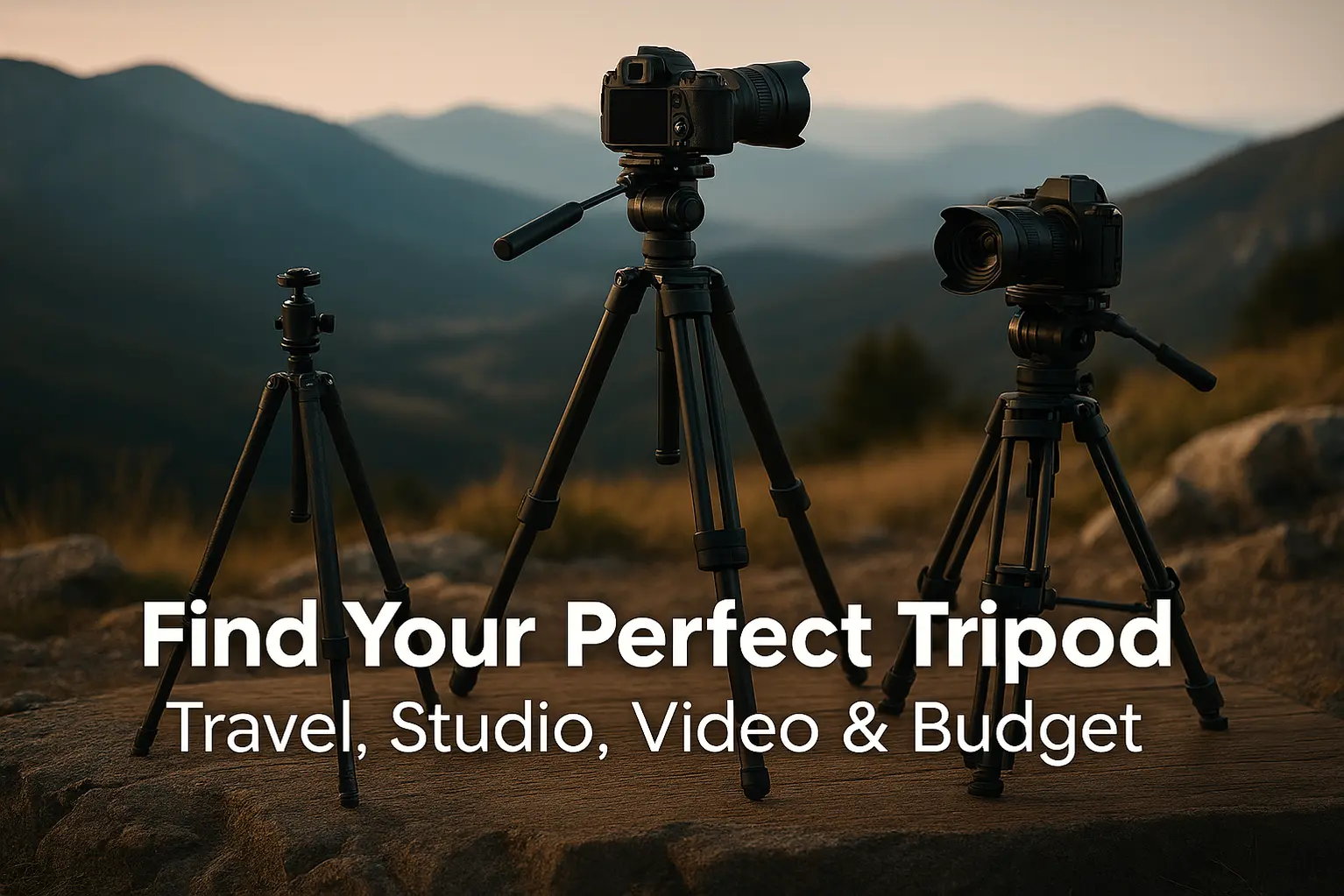
If you’re searching for the best tripod for travel, studio, or video, you’re already closer to better photos and more professional-looking footage than most creators. A tripod isn’t just an accessory; it’s one of the smartest investments you can make if you care about sharpness, stability, and long-term image quality.
Whether you shoot landscapes with a lightweight mirrorless camera, work in a studio with heavy glass, or create video content for YouTube and client projects, the right tripod changes everything. In this guide, Daisy breaks down the best tripods in 2026 across travel, studio, video, and budget categories so you can confidently choose the one that fits your workflow.
We’ve carefully selected reliable, proven models from brands like Peak Design, Manfrotto, Benro, SmallRig, Ulanzi, K&F Concept, and Neewer that consistently deliver real-world performance, not just marketing specs.
This isn’t about buying the most expensive tripod. It’s about buying the right tripod for your specific shooting style. Travel photographers need portability. Studio shooters need rock-solid stability. Video creators need smooth fluid motion. Choosing incorrectly often means buying twice.
Why Choosing the Right Tripod Matters More Than You Think
A tripod does far more than just “hold your camera.” The right model directly affects image sharpness, exposure flexibility, video smoothness, and even how professional your final results look.
1. Sharper Images — Instantly
Even with modern in-body stabilization, micro vibrations from your hands reduce maximum sharpness. A stable tripod eliminates those movements completely, allowing your lens to resolve its full optical potential. This is especially critical for landscape photography, macro work, and high-resolution sensors.
2. Better Low-Light Performance
A tripod allows you to use lower ISO settings in low light instead of pushing noise levels higher. This means cleaner files, better dynamic range, and more editing flexibility. Instead of ISO 6400 handheld, you can shoot ISO 100 on a tripod and dramatically improve image quality.
3. Professional-Level Video Stability
For video creators, stability is not optional. A proper video tripod with a fluid head enables smooth panning, controlled tilting, and cinematic motion. Shaky footage instantly signals amateur production, while stable footage builds trust and professionalism.
4. More Precise Composition
Using a tripod slows you down in a good way. It forces intentional framing, level horizons, and refined composition. In studio environments especially, this precision separates casual shooting from professional workflow.
Quick Comparison: Best Tripods at a Glance
If you already know what you need, this quick comparison table will help you jump directly to the right tripod category. Travel shooters prioritize portability, studio photographers need stability, and video creators require smooth motion control.
| Use Case | Best Overall | Best Travel | Best Studio | Best Video | Best Budget |
|---|---|---|---|---|---|
| Model | Peak Design Travel Tripod Carbon Fiber | Ulanzi Zero Y | Manfrotto 190XPRO | Manfrotto MVH500AH Kit | K&F Concept Tripod |
| Strength | Ultra-compact + premium stability Perfect hybrid balance |
Lightweight travel build Great for carry-on shooting |
Rock-solid studio support High load capacity |
Smooth fluid head motion Designed for video work |
Affordable entry-level support Great starter option |
| Weight Advantage | ★★★★☆ Carbon fiber build |
★★★★★ Designed for portability |
★★★☆☆ More stability than portability |
★★★☆☆ Heavier due to fluid system |
★★★★☆ Light for the price range |
| Stability Level | ★★★★★ Excellent rigidity |
★★★★☆ Impressive for size |
★★★★★ Studio-ready stability |
★★★★★ Video-optimized structure |
★★★☆☆ Good for casual use |
| Check Price | Amazon B&H |
Amazon B&H |
Amazon B&H |
Amazon B&H |
Amazon B&H |
This table gives you a fast decision overview. Below, we’ll break down each category in detail and explain exactly why these models stand out in real-world shooting situations.
Best Tripods for Travel Photography
When choosing the best tripod for travel photography, weight and portability matter just as much as stability. A travel tripod needs to fit inside carry-on luggage, attach easily to a backpack, and remain light enough to carry all day without slowing you down.
If you want maximum portability, check our Travel Photography Tips for expert advice on choosing the right tripod.
The most important factors to consider are total weight, folded size, material (carbon fiber vs aluminum), and overall packability. Travel photographers often prioritize compact folded length and lighter materials, especially for hiking, city exploration, or international trips.
Carbon fiber tripods typically offer the best strength-to-weight ratio, making them ideal for frequent travelers. Aluminum models are more affordable but slightly heavier. The right balance depends on how often you travel and how much weight you’re willing to carry.
Best Overall Travel Tripod – Peak Design Travel Tripod Carbon Fiber
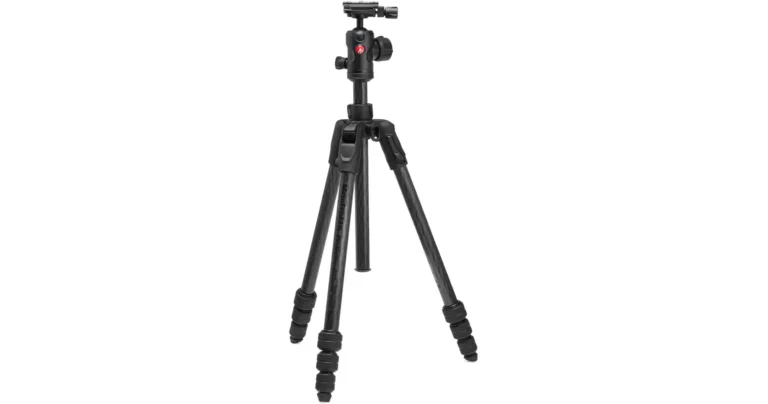
The Peak Design Travel Tripod Carbon Fiber is one of the most intelligently designed travel tripods on the market. Its ultra-compact folded profile eliminates wasted space between the legs, making it significantly slimmer than traditional tripod designs while maintaining impressive rigidity.
Weighing roughly 2.8 lbs (1.27 kg), it delivers exceptional portability without sacrificing stability. The fast-deploy leg system, ergonomic ball head, and premium carbon fiber construction make it ideal for serious travel photographers who demand both performance and convenience.
Check Amazon Prices
Buy at B&H
Tip: Ideal if you prioritize compact packing and travel convenience without compromising stability.
Best Lightweight Travel Tripod – Ulanzi Zero Y
The Ulanzi Zero Y is designed specifically for creators who prioritize extreme portability without moving into ultra-premium price territory. Its slim folding mechanism and lightweight carbon fiber construction make it especially attractive for travel photographers, vloggers, and hybrid shooters who need to pack light.
Despite its compact footprint, it delivers impressive rigidity for mirrorless cameras and lightweight DSLR setups. The modern minimalist design reduces bulk, and the fast leg-lock system makes quick setup effortless during fast-moving travel situations.
Check Amazon Prices
Buy at B&H
Tip: Excellent choice if you want carbon fiber travel performance without paying premium flagship prices.
Best Value Travel Tripod – Manfrotto Befree Advanced
The Manfrotto Befree Advanced remains one of the most reliable travel tripod options for photographers who want durability and brand-proven engineering. Built with aluminum construction, it offers slightly more weight than carbon fiber alternatives but compensates with strong stability and long-term reliability.
The Befree Advanced folds compactly for travel and supports heavier camera setups better than many ultra-light travel models. Its ball head system provides smooth adjustments for photography, making it ideal for landscapes, cityscapes, and architectural shooting.
Check Amazon Prices
Buy at B&H
Tip: Great balance between portability and stability for photographers who carry slightly heavier lenses.
Best Tripods for Studio Photography
Studio photography demands maximum stability, precision framing, and long-term durability. Unlike travel setups where weight is a priority, studio tripods are built to minimize vibration and support heavier camera and lens combinations with absolute reliability.
Key factors when choosing a studio tripod include load capacity, leg diameter, center column design, and overall rigidity. In controlled lighting environments, even minor vibrations can reduce sharpness, especially when working with high-resolution full-frame cameras or telephoto lenses.
Aluminum construction is common in studio tripods because weight is less of a concern, while thicker leg sections provide better torsional rigidity. For professional environments, durability and long-term reliability matter more than compact folding size.
Best Professional Studio Tripod – Manfrotto 190XPRO
The Manfrotto 190XPRO is a proven studio workhorse designed for photographers who value reliability and precision. Its solid aluminum construction and versatile center column mechanism allow for both standard shooting and horizontal positioning for product or macro photography.
The sturdy leg locks and rigid frame minimize vibration, making it an excellent choice for high-resolution cameras and controlled studio setups. It offers an ideal balance between professional stability and manageable size for indoor shooting environments.
Check Amazon Prices
Buy at B&H
Tip: Excellent choice for photographers who need horizontal center column flexibility for product or macro shooting.
Best Heavy-Duty Studio Tripod – Benro Mach3
The Benro Mach3 series is built for photographers who prioritize maximum load capacity and structural strength. With thick leg sections and strong locking mechanisms, it delivers outstanding stability for heavier DSLR or mirrorless setups paired with professional telephoto lenses.
Unlike compact travel tripods, the Mach3 focuses entirely on rigidity and long-term durability. It is especially suitable for controlled studio environments where weight is not a limitation and performance consistency matters most.
Check Amazon Prices
Buy at B&H
Tip: Ideal if you regularly use large lenses and want uncompromised rigidity in a studio setup.
Best Tripods for Video and Hybrid Creators
Video production requires a completely different type of tripod compared to still photography. While photo tripods focus primarily on rigidity, video tripods must provide smooth panning, controlled tilting, and consistent motion resistance through a proper fluid head system.
If you create YouTube content, client projects, interviews, or cinematic B-roll, a true video tripod is not optional. Fluid drag control and counterbalance systems allow for professional camera movement that handheld shooting simply cannot replicate.
Key features to look for include a dedicated fluid head, stable mid-level or ground spreaders, adjustable pan drag, and solid load capacity for heavier video rigs with microphones, monitors, or external recorders.
Best Video Tripod Overall – Manfrotto MVH500AH Kit
The Manfrotto MVH500AH Kit is one of the most trusted entry-to-mid-level fluid head systems for serious video creators. Designed specifically for smooth pan and tilt motion, it delivers professional-looking footage without moving into high-end cinema pricing territory.
The fluid head provides controlled resistance for stable tracking shots, while the sturdy legs offer reliable support for mirrorless and DSLR video rigs. It is especially suitable for interviews, event coverage, and YouTube production setups.
Check Amazon Prices
Buy at B&H
Tip: Excellent balance between affordability and true fluid head performance for professional-looking video.
Best Travel-Friendly Video Tripod – Benro Aero 4
The Benro Aero 4 is designed for creators who need a fluid head system but still want reasonable portability. It combines lightweight construction with a true fluid video head, making it ideal for hybrid creators who shoot both stills and video on location.
The compact folded design makes it easier to transport compared to traditional heavy video rigs, while still providing stable performance for mirrorless cameras and compact cinema setups.
Check Amazon Prices
Buy at B&H
Tip: Strong option if you shoot travel content but still want real fluid head capability.
Best Budget Video Tripod – SmallRig AD-01
The SmallRig AD-01 provides surprising video performance at an accessible price point. Featuring a fluid head and solid aluminum construction, it is designed for entry-level videographers and content creators building their first serious setup.
While it may not match higher-end fluid systems in drag precision, it delivers stable panning and tilting for YouTube videos, online courses, and basic commercial content creation.
Check Amazon Prices
Buy at B&H
Tip: Ideal starter option if you want fluid head control without a large upfront investment.
If you want more budget friendly options, check our Best Budget Tripods for expert advice on choosing the right tripod.
Carbon Fiber vs Aluminum Tripods: Which One Should You Choose?
One of the most important decisions when buying a tripod is choosing between carbon fiber and aluminum construction. Both materials offer distinct advantages, and the right choice depends on how and where you shoot.
Understanding the differences in weight, vibration absorption, durability, and price can help you avoid overspending or underbuying for your specific needs.
Weight Difference
Carbon fiber tripods are significantly lighter than aluminum models while maintaining comparable strength. For travel photographers, hikers, and frequent flyers, reducing even one pound of carry weight can make a noticeable difference during long shooting days.
Aluminum tripods are heavier, but that extra weight can sometimes improve stability in controlled environments like studios where portability is less important.
Vibration Absorption
Carbon fiber naturally absorbs vibrations better than aluminum. This means faster vibration dampening after adjusting your camera, which can result in slightly sharper images, especially when shooting long exposures or using telephoto lenses.
Aluminum tripods are rigid and durable but may transmit minor vibrations slightly longer than carbon fiber models. In real-world photography, this difference becomes more noticeable in landscape or macro work.
Durability and Weather Resistance
Carbon fiber does not corrode and performs well in extreme weather conditions, making it a strong choice for outdoor and travel photographers. Aluminum tripods are also durable but may require more maintenance in harsh environments such as saltwater or high humidity conditions.
Price Consideration
Carbon fiber tripods are typically more expensive due to material costs and manufacturing complexity. Aluminum tripods provide excellent performance at a lower price point, making them ideal for budget-conscious photographers or studio use.
Final Recommendation: Which Tripod Should You Buy?
Choosing the right tripod ultimately comes down to how and where you shoot. Instead of focusing only on price, think about your primary use case and long-term workflow. The right tripod should feel like a stable extension of your camera, not a compromise.
If You Want the Best Overall Travel Performance
The Peak Design Travel Tripod Carbon Fiber delivers the best balance between portability, rigidity, and premium build quality. It is ideal for frequent travelers and hybrid creators who want long-term reliability in a compact form factor.
Check Amazon Prices
Buy at B&H
Top pick for serious travel photographers who prioritize portability without sacrificing stability.
If You Need Maximum Studio Stability
The Benro Mach3 offers heavy-duty support and superior rigidity for larger camera setups. It is the right investment for portrait, product, and commercial photographers who shoot primarily indoors.
Check Amazon Prices
Buy at B&H
Best for heavier camera and telephoto lens combinations in controlled environments.
If You Create Video or YouTube Content
The Manfrotto MVH500AH Kit provides smooth fluid head performance that dramatically improves video quality. For interviews, event coverage, and professional content creation, this is the most reliable choice in its class.
Check Amazon Prices
Buy at B&H
Recommended for creators who prioritize smooth cinematic motion over portability.
If You Are on a Budget
The K&F Concept Tripod delivers solid performance for beginners and hobbyists without a large upfront investment. It is a smart starting point for photographers upgrading from entry-level gear.
Check Amazon Prices
Buy at B&H
Ideal entry-level option if you want stability without a premium price tag.
Frequently Asked Questions About Tripods
1. What is the difference between a travel tripod and a studio tripod?
Travel tripods prioritize compact folded size, lightweight materials (often carbon fiber), and portability, while studio tripods focus on maximum stability, heavy load capacity, and vibration reduction for controlled indoor setups.
2. Should I choose carbon fiber or aluminum?
Carbon fiber is lighter and absorbs vibrations better, ideal for travel and outdoor photography. Aluminum is heavier, more affordable, and works well in studio or controlled environments where portability is less critical.
3. Can I use a photo tripod for video?
While photo tripods can hold a camera for video, they usually lack smooth pan and tilt control. For professional-looking video, a tripod with a fluid head is recommended.
4. How much weight should my tripod support?
Choose a tripod that can safely handle your camera and lens setup, ideally 1.5 to 2 times the total gear weight. This ensures stability, reduces vibration, and improves sharpness for photos and video.
5. What is the best tripod for hybrid shooters?
Hybrid shooters benefit from lightweight carbon fiber tripods with versatile heads like the Peak Design Travel Tripod or Benro Aero 4, which allow both photography and smooth video shooting on the same setup.