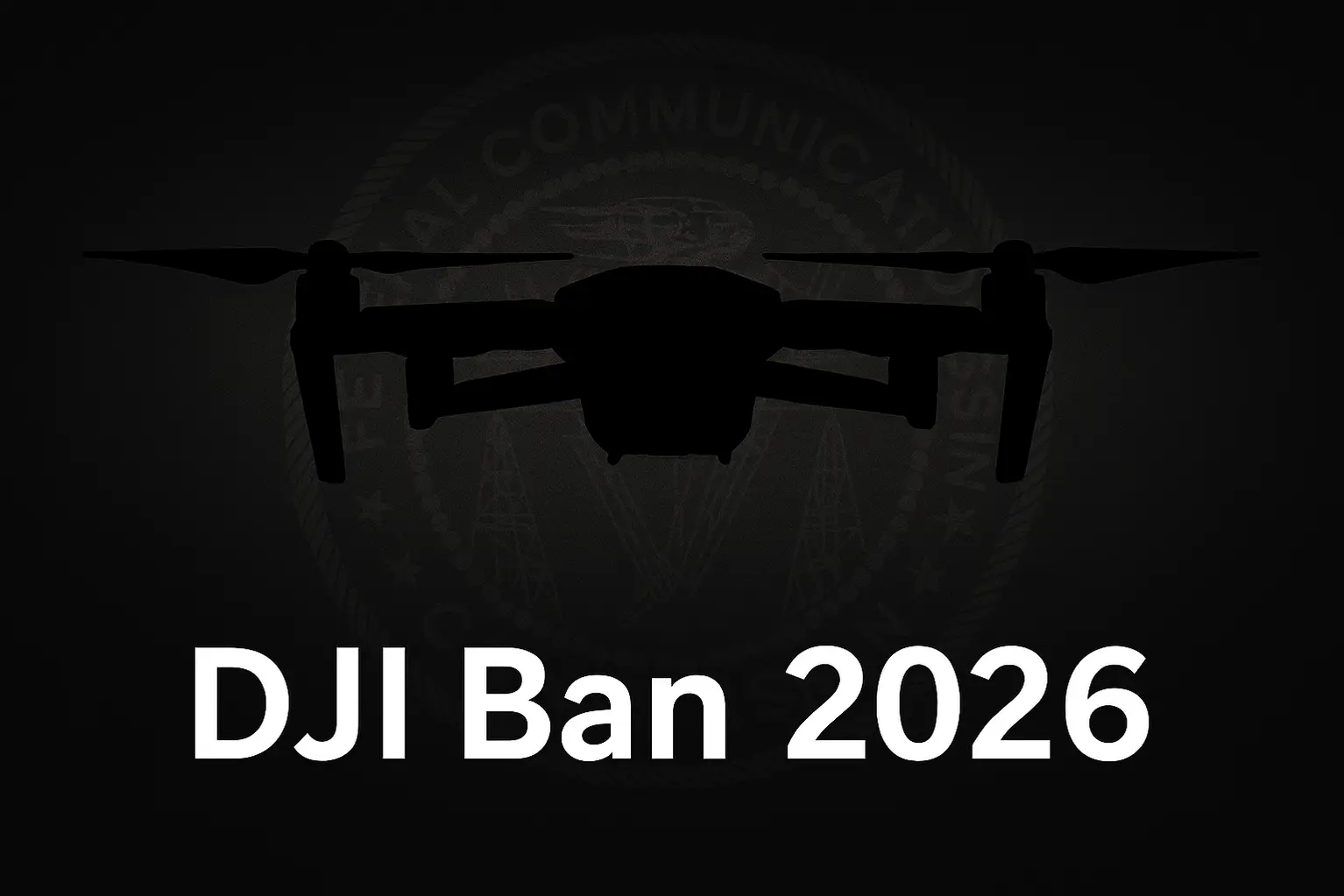
Summary: A de facto ban on new foreign-made drones
The Federal Communications Commission (FCC) has updated its Covered List to include foreign-made unmanned aircraft systems (UAS) and UAS critical components, effectively blocking new drone models from receiving equipment authorization needed for importation, marketing, or sale in the United States. Existing drones can still be flown, and previously authorized models may continue to be sold, but the pipeline for new foreign-made systems has been cut off as of December 23, 2025.
What exactly did the FCC decide?
Per the FCC’s fact sheet, foreign UAS and UAS critical components added to the Covered List are prohibited from receiving equipment authorization. Most wireless devices require this authorization prior to importation, marketing, or sale in the U.S., so covered UAS cannot enter the market going forward. The action explicitly states it does not affect previously purchased drones and does not prevent retailers from selling device models that were already authorized earlier this year or previously.
National security rationale and major events
The FCC cites national security concerns—specifically risks of unauthorized surveillance, data exfiltration, and disruptions—while acknowledging drones’ public safety and innovation benefits. It references upcoming mass-gathering events like the 2026 FIFA World Cup and the 2028 LA Summer Olympics as added context for safeguarding U.S. airspace and critical infrastructure.
Who is affected and what’s allowed?
Media analyses emphasize that while U.S. consumers can keep flying their current drones, new foreign-made models—particularly from brands like DJI and Autel—will not be able to enter the U.S. market without an exception granted by national security authorities. Reports also note that replacement parts may face import challenges under the new regime, creating long-term maintenance concerns for owners of foreign-made systems.
Effective date and immediate market impact
The restrictions took effect on December 23, 2025, immediately curtailing the import and sale of new foreign-made drones that require FCC authorization. Coverage notes that U.S. drone makers welcomed the decision, while hobbyists and professionals expecting new models were left with a narrowed upgrade path, at least in the near term.
How exceptions could work
Under U.S. law, the FCC updates the Covered List at the direction of national security authorities and cannot unilaterally remove equipment. Media reports add that the Pentagon or the Department of Homeland Security could, in principle, determine that certain UAS or components do not pose the specified risks, enabling exceptions—though no such carve-outs have been announced for consumer drones at this time.
Practical guidance for U.S. buyers and operators
- Keep flying: If you own a DJI or other foreign-made drone, you may continue using it as before. Retailers can also sell previously authorized models already in stock.
- Expect limited new releases: New foreign-made models and covered components will face authorization barriers, reducing availability of future upgrades and possibly parts over time.
- Plan maintenance: Consider securing critical spares for your current drone, and monitor retailer policies on parts availability.
- Watch for updates: Follow official FCC communications for policy adjustments and any national-security–driven exceptions that could affect specific models or components.
Context and further reading
You can review the FCC’s announcement and fact sheet directly here: FCC Press Release and Fact Sheet. For broader market context and developing lists of potentially affected products, see industry coverage and analyses, including third-party trackers: The US government’s de facto ban on new DJI drones is here. (Note: treat non-government lists as evolving and subject to change.)
Bottom line
The FCC’s Covered List update establishes a durable, national-security–driven framework that blocks new foreign-made drones and critical components from entering the U.S. market, while preserving use of existing, previously authorized devices. For creators and commercial operators, the short-term path involves maintaining current fleets and monitoring for any official exceptions or domestic alternatives as the U.S. drone ecosystem recalibrates.
See also DJI Osmo Pocket 4 Rumors: Dual-Lens Pro Model Leaked, FCC Confirms U.S. Launch



[…] dailycameranews.com […]