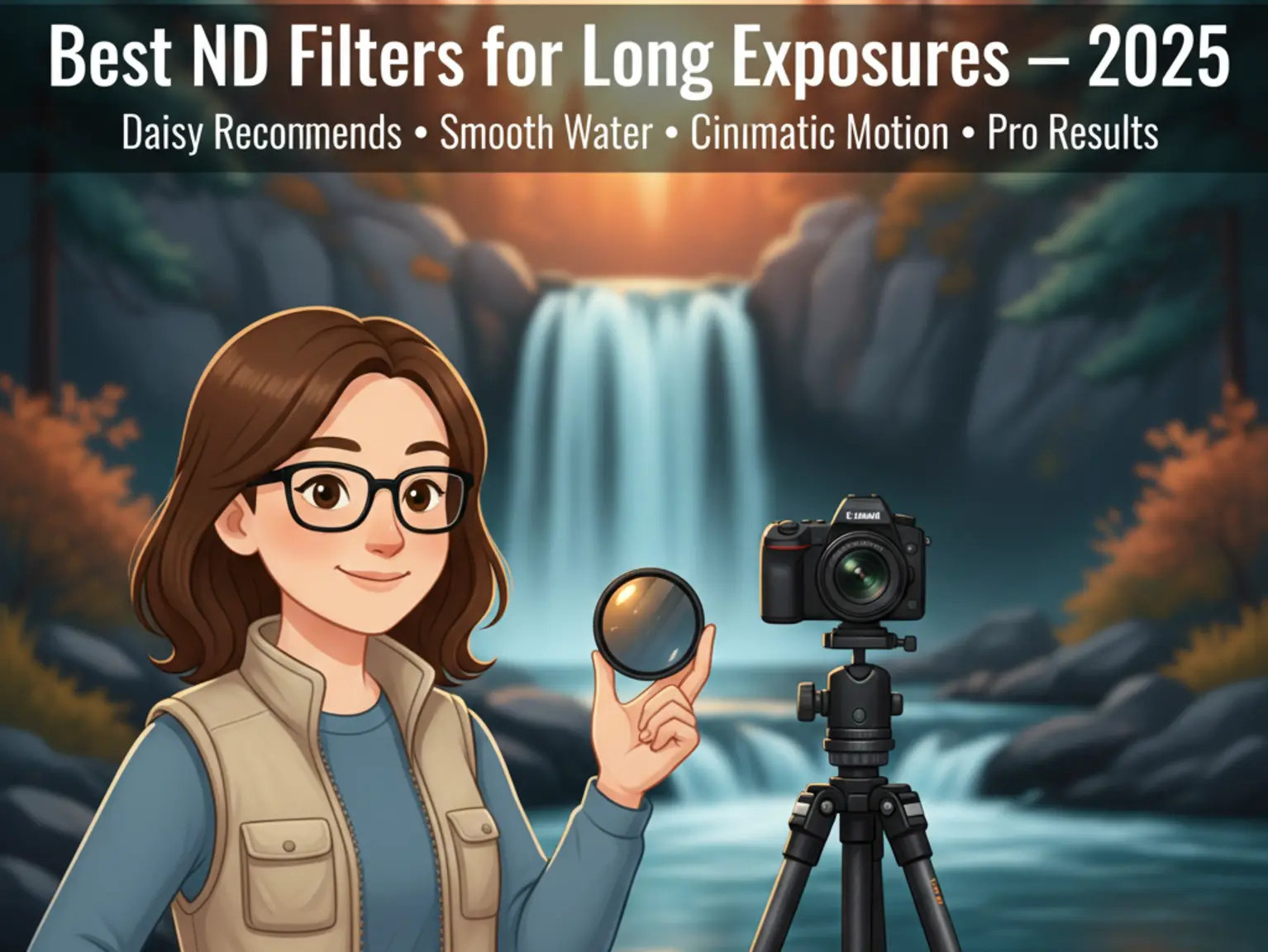
Long exposure photography has always been one of my favorite ways to slow things down and truly shape light. Watching water turn silky, clouds stretch across the sky, or busy streets dissolve into motion never gets old. And almost every time, one small accessory makes all the difference: a good ND filter.
If you’re shooting long exposures in daylight, an ND filter isn’t optional — it’s essential. Without one, your shutter speed simply won’t slow down enough, no matter how low your ISO goes or how far you stop down. That’s why choosing the right ND filter can completely change what’s possible with your camera.
In this guide, I’m sharing my personal picks for the best ND filters for long exposure photography in 2025. These are filters that photographers actually trust — from premium glass with near-perfect color accuracy to more affordable options that still deliver impressive results.
I’ll also walk you through the basics, including how ND filters work, the difference between fixed and variable ND filters, and what really matters when choosing one for your shooting style. Whether you’re photographing waterfalls, seascapes, cityscapes, or experimenting with motion blur for the first time, this guide is designed to help you buy with confidence.
What Is an ND Filter (And Why Long Exposures Need One)
An ND filter — short for Neutral Density filter — works like sunglasses for your lens. It reduces the amount of light entering the camera without changing colors, allowing you to use slower shutter speeds even in bright conditions.
This becomes critical for long exposure photography. In daylight, your camera naturally wants to use fast shutter speeds to avoid overexposure. The result? Frozen motion instead of the smooth, flowing look that defines long exposure images.
With an ND filter: Slow shutter speeds, silky motion, dramatic skies, and true long exposures.
By cutting light at the lens level, ND filters let you push your shutter speed into multi-second territory — even under harsh sunlight. That’s how photographers capture soft waterfalls, streaking clouds, empty city streets, and minimalist seascapes during the middle of the day.
ND filters are measured in stops. Each stop reduces the light by half. For example, a 10-stop ND filter (often called ND1000) dramatically darkens the scene, making it the go-to choice for serious long exposure photography.
In short, if long exposure photography is something you truly want to explore, an ND filter isn’t just helpful — it’s one of the most important accessories you can own.
Fixed ND vs Variable ND: Which One Should You Choose?
Before picking an ND filter, the first real decision you’ll face is whether to go with a fixed ND or a variable ND. Both reduce light, but they work in very different ways — and the right choice depends on how you shoot.
If you’re new to long exposure photography, it also helps to understand how shutter speed,
aperture, and ISO work together. If you want a quick refresher, I recommend reading Daisy Teaches: The Exposure Triangle before making your decision.
Fixed ND Filters (ND8, ND64, ND1000)
Fixed ND filters reduce a specific, constant amount of light — for example, 6 stops, 10 stops, or even more. Once mounted, you know exactly how much light is being cut.
- Best image quality and color accuracy
- No risk of cross-polarization or uneven exposure
- Preferred choice for serious long exposure photography
For photographers who mainly shoot waterfalls, seascapes, or clouds, a strong fixed ND (especially a 10-stop ND) is usually the best and most reliable option.
Variable ND Filters
Variable ND filters allow you to adjust the strength by rotating the filter. They’re extremely convenient, especially if you switch quickly between different lighting conditions.
- Flexible and fast to use
- Popular with hybrid shooters and video creators
- Can replace multiple fixed ND filters
The trade-off is that variable ND filters can sometimes introduce color shifts or uneven exposure, especially at their strongest settings. High-quality variable NDs minimize this, but they’re rarely as optically clean as the best fixed ND filters.
If you’re shooting with an APS-C mirrorless camera, ND filters can be just as powerful — especially for travel, street, and lightweight long exposure setups. If you’re still deciding which APS-C body fits your style best, Daisy recently put together a detailed guide you might enjoy: Best APS-C Mirrorless Cameras 2025.
Daisy’s Picks: Best ND Filters for Long Exposures in 2025
After testing, researching, and seeing what photographers actually rely on in the field, these are my top ND filter picks for long exposure photography in 2025. Each option below serves a slightly different type of shooter — so focus on what fits your style best.
For full-frame shooters, ND filters truly shine — especially in landscape, seascape, and cinematic video work where controlling light precisely is critical. If you’re currently choosing or upgrading your system, Daisy recommends checking this full comparison first: Best Full-Frame Mirrorless Cameras 2025.
NiSi ND1000 (10-Stop)
If you’re serious about long exposure photography, the NiSi ND1000 is one of the safest and most trusted choices. It delivers excellent sharpness with minimal color cast, even in challenging daylight conditions.
Check Price & Availability
View on Amazon View on B&H Photo
Hoya ProND1000
Hoya’s ProND line is known for its consistent color accuracy and solid build quality. The ProND1000 is a favorite among photographers who want predictable results without surprises in post-processing.
Check Price & Availability
View on Amazon View on B&H Photo
B+W ND 3.0 (10-Stop)
Built with premium Schott glass, the B+W ND 3.0 is a professional-grade filter designed for photographers
who demand durability and optical precision.
Check Price & Availability
View on Amazon View on B&H Photo
PolarPro QuartzLine ND (6-Stop / 10-Stop)
PolarPro’s QuartzLine ND filters are popular among hybrid shooters. They offer excellent clarity and reduced reflections, making them suitable for both photos and video.
Check Price & Availability
View on Amazon View on B&H Photo
NiSi Variable ND (1–5 Stop / 5–9 Stop)
If flexibility matters more than absolute optical purity, NiSi’s Variable ND filters are among the cleanest variable options available today.
Check Price & Availability
View on Amazon View on B&H Photo
K&F Concept Nano-X ND1000
K&F Concept’s Nano-X ND1000 proves that you don’t need to spend a fortune to get started with long exposures. It offers impressive performance for its price, making it a favorite among beginners.
Check Price & Availability
View on Amazon View on B&H Photo
How to Choose the Right ND Filter (Before You Buy)
Before clicking the buy button, it’s worth taking a moment to choose the right ND filter for your setup.
A good ND filter can last for years — but only if it fits both your lens and your shooting style.
1. Choose the Correct Filter Size
ND filters screw directly onto your lens, so size matters. Check the front of your lens or the lens cap for the filter diameter (for example, 67mm, 77mm, or 82mm).
If you own multiple lenses, buying one larger ND filter and using inexpensive step-up rings is often a smarter and more economical solution.
2. Decide How Strong You Need the Filter
For classic long exposure photography in daylight, a 10-stop ND filter (ND1000) is the most common and versatile choice. It allows you to extend shutter speeds into several seconds or even minutes.
- 6-stop ND: Mild motion blur, softer water, less extreme results
- 10-stop ND: Silky water, dramatic clouds, minimalist scenes
- Variable ND: Flexible control for changing light or hybrid shooting
3. Watch Out for Color Cast
Cheaper ND filters can introduce unwanted color shifts, especially in strong sunlight. While this can often be corrected in post-processing, higher-quality filters deliver more neutral colors straight out of the camera.
If color accuracy matters to you, investing in a reputable brand usually pays off in the long run.
4. Build Quality and Coatings Matter
Look for ND filters with multi-coating or nano-coating. These coatings help reduce reflections, improve contrast, and make the filter easier to clean — especially useful when shooting near water or in dusty environments.
Daisy’s Final Thoughts
A good ND filter is one of those rare photography accessories that continues to deliver value long after the initial purchase. Cameras come and go, but a well-made ND filter can stay in your kit for years and work across multiple camera systems.
Whether you choose a premium fixed ND for classic long exposures or a flexible variable ND for hybrid shooting, the most important thing is to pick a filter that matches how you actually shoot — not just what looks good on paper.
If you’re just starting out, don’t overthink it. One solid 10-stop ND filter can open the door to creative long exposure photography and completely change how you see light and motion.
Long exposure photography is all about slowing down and being intentional. With the right ND filter, you’ll spend less time fighting the light and more time enjoying the process.
I hope this guide helps you choose an ND filter you’ll feel confident using in the field. When you’re ready, check current prices and availability using the links above — and most importantly, get out there and start experimenting.