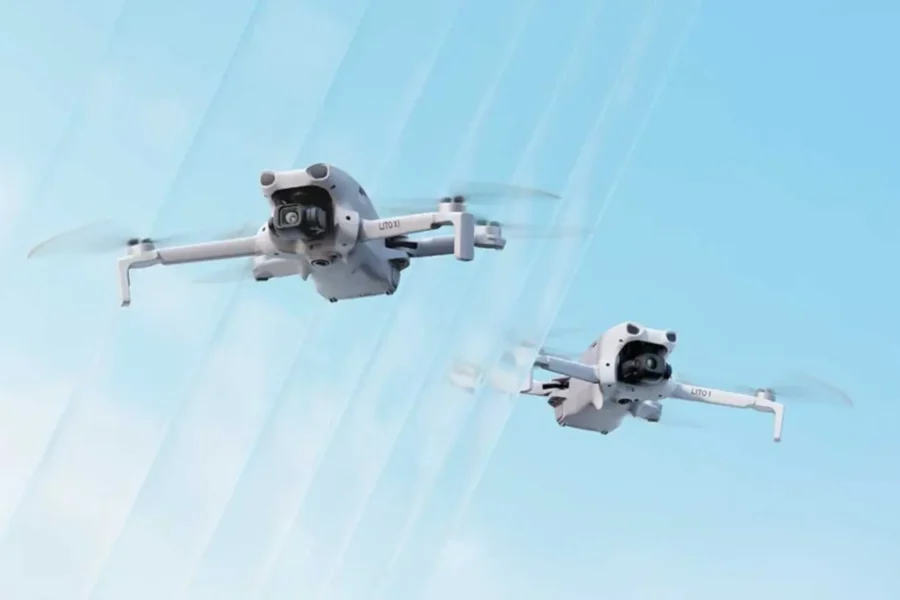
The regulatory landscape for unmanned aerial vehicles (UAVs) in the United States is undergoing a significant transformation. Following years of congressional debates, supply chain audits, and national security discussions, the Federal Communications Commission (FCC) has issued an operational update that targets domestic drone assembly and manufacturing practices.
Starting 13 October, the FCC will officially bar American drone companies, custom enterprise builders, and commercial assembly firms from using components, transmission modules, and flight control boards manufactured by Chinese drone giants DJI and Autel Robotics. This decision closes a critical loophole that previously allowed domestic drone integrators to utilize foreign internal electronics while branding the finalized aircraft as “Assembled in USA.”
For additional coverage on hardware releases, market trends, and regulatory updates across the aerial sector, check out our comprehensive DJI News Category and explore our overarching Drone Industry Hub.
Daisy’s Take: This represents a major shift for the American drone industry! For years, many domestic enterprise drone startups relied heavily on DJI and Autel hardware—such as gimbals, optical sensors, transmission chips, and ESC motor controllers—to build customized commercial platforms. By cutting off access to these component pipelines starting October 13, US manufacturers face an urgent race to secure NDAA-compliant domestic alternatives without driving prices through the roof!
Understanding the FCC Component Rule Update
| Regulatory Parameter | Previous Framework | Updated Rule (Effective Oct 13) |
|---|---|---|
| FCC Covered List Inclusion | Restricted direct importation of complete foreign radio systems. | Expands restrictions to individual components, RF chips, and flight controllers. |
| US Manufacturing Integration | US firms could use foreign ESCs, gimbals, and logic boards. | Banned: No foreign Covered List components in new US builds. |
| Impact on Existing Drones | Existing FAA-registered operational units remain flyable. | Existing units are grandfathered; applies strictly to new production models. |
| FCC Equipment Authorization | Individual modules received independent authorization. | Revoked/Denied for new equipment applications from banned entities. |
The primary driver behind this regulatory escalation is the FCC’s expansion of its Covered List—a federal registry of communications equipment determined to pose an unacceptable risk to national security. To understand the legal groundwork and legislation that led to this point, read our background guide on the DJI Ban & FCC Covered List Explained.
Under the revised rules, the FCC will no longer grant equipment authorizations for any radio frequency (RF) transmitting device, flight controller logic board, or video transmission module produced by entities on the Covered List—specifically naming Shenzhen DJI Sciences and Technology Ltd. and Autel Robotics.
See also : Airline Rules for Traveling with Drones and Camera Gear (2026 Guide)
Key Hardware Components Affected by the Oct 13 Deadline
Because modern drones rely on tightly integrated ecosystems of hardware and software, the scope of this ban impacts several core sub-assemblies commonly sourced by domestic integrators:
- Radio Frequency Transmission Modules: Custom long-range image and control telemetry transceivers (including proprietary transmission chips used for video feed pass-through).
- Flight Controllers & IMU Boards: Main logic processing units, auto-pilot chips, and inertial measurement units (IMUs) engineered by DJI or Autel.
- Electronic Speed Controllers (ESCs): Motor speed regulators that communicate directly with primary control buses.
- Integrated Gimbal & Optical Payloads: Camera assemblies and stabilization hardware with onboard signal processing boards.
What About Existing Drones Already in the Air?
It is important for commercial operators and recreational pilots to note that the October 13 rule change applies to new equipment authorizations and manufacturing pipelines. Existing, legally purchased drones currently operated by consumers, real estate photographers, or public safety agencies will not be grounded immediately by this specific FCC rule update.
See also : DJI Mini 6 Pro Rumor Roundup: Expected Release Date, Price & Spec Leak Predictions
Impact on the American Drone Industry & Market Supply Chains
While the goal of the policy is to foster a secure, sovereign US drone manufacturing sector, the short-term reality presents challenges for domestic builders. High-performance American drone alternatives often carry significantly higher price tags due to supply chain scale differences.
1. Supply Chain Bottlenecks for US Manufacturers
Many smaller US drone companies operate on an integration model—designing custom airframes and software while relying on established foreign component manufacturers for reliable, low-cost motors, ESCs, and optics. Replacing these components requires sourcing certified parts from Blue UAS-approved vendors, which currently face production backlog pressures.
2. Price Pressure on Enterprise & Commercial Buyers
As US builders transition away from cost-effective component sources, the production cost per unit is expected to rise. Commercial inspection firms, agricultural mapping operators, and public safety teams seeking new drone fleets will likely face higher hardware acquisition costs.
3. Opportunities for Compliant European & Allied Tech
The ban opens substantial opportunities for allied drone manufacturers and component suppliers based in Taiwan, South Korea, France, and Germany. Companies producing NDAA-compliant flight controllers, open-source PX4/ArduPilot autopilots, and independent RF links are seeing increased demand from American integrators.
Daisy’s Pro Tip: If you build or fly custom FPV (First Person View) drones for cinematography, pay close attention to digital HD video transmission gear! Digital FPV air units and transmission systems sourced from covered brands fall directly under these RF authorization restrictions. If you are exploring custom or acrobatic cinema setups, check out our guide to the Best FPV Drones to see compliant digital and analog video options!
What Lies Ahead for DJI & Consumer Photographers?
As regulatory agencies continue to restructure foreign technology policies, DJI continues to push innovation across its action camera, handheld gimbal, and non-restricted imaging lines. For a detailed breakdown of upcoming product rumors, camera announcements, and hardware developments, read our comprehensive DJI Rumors Recap & Future Outlook.
For consumer photographers and hobbyist creators using off-the-shelf, ready-to-fly retail drones, direct store availability depends heavily on existing import inventory and ongoing legal challenges filed in federal court. However, the October 13 deadline marks a clear boundary for commercial drone production within the United States.
Frequently Asked Questions (FAQ)
Frequently Asked Questions
Q: What changes on October 13 regarding drone manufacturing?
A: Effective October 13, US drone manufacturers are prohibited from incorporating covered foreign components—including flight controllers, RF chips, and camera transmission modules from DJI or Autel—into new domestic aircraft builds.
Q: Will my current consumer DJI drone be banned from flying on October 13?
A: No. The rule applies to new FCC equipment authorizations and manufacturing supply chains. Existing, legally purchased retail drones are grandfathered and remain flyable under standard FAA rules.
Q: Why is the FCC updating its Covered List rules for drone components?
A: The FCC expanded its enforcement framework to address national security considerations, ensuring that domestic commercial and government drone fleets do not rely on foreign-sourced communications and flight control hardware.
Final Thoughts
The FCC’s October 13 deadline represents a major milestone in the restructuring of the US drone industry. By banning DJI and Autel components from newly manufactured domestic drones, regulators are reshaping domestic supply chains and accelerating the shift toward NDAA-compliant, American-built UAV platforms.
Stay tuned to Daily Camera News as we track further policy announcements, supply chain developments, and new drone releases across the industry!
via DroneXL