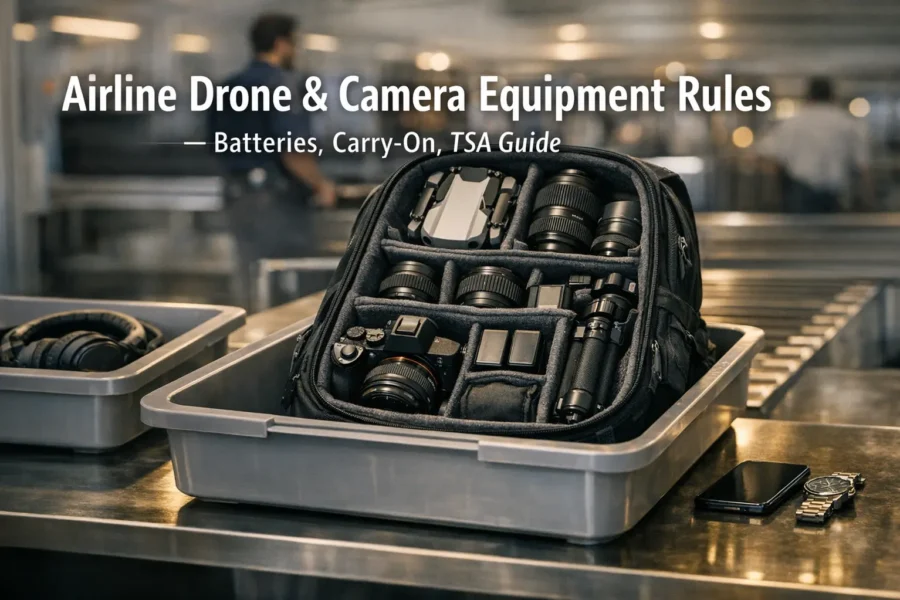
Traveling with a camera bag used to be simple. Today, it’s a different story.
If you’re flying with a drone, mirrorless camera, lenses, batteries, or even a tripod, airline rules can quickly turn into a confusing maze of restrictions, safety policies, and country-specific laws.
This guide breaks everything down in a practical, real-world way so you can travel confidently with your gear in 2026.
Traveling with Camera Gear: What You Need to Know in 2026
Airlines don’t really care about your camera. What they care about is what powers it.
The biggest issue for photographers isn’t the gear itself—it’s lithium batteries.
From mirrorless cameras to drones and gimbals, nearly everything we use today runs on lithium-ion batteries, which are classified as potentially dangerous due to fire risk.
This is why understanding airline battery rules is more important than knowing how to pack your lenses.
The Biggest Mistakes Travelers Still Make
Even experienced photographers make these mistakes:
• Packing spare batteries in checked luggage
• Ignoring watt-hour (Wh) limits
• Bringing too many batteries without airline approval
• Assuming drone rules are the same everywhere
These mistakes can lead to confiscation, delays—or worst case, missing your flight.
Can You Bring a Drone on a Plane?
Yes, you can bring a drone on a plane. But how you pack it matters more than the drone itself.
Carry-On vs Checked Baggage Rules
Drones are generally allowed in both carry-on and checked baggage. However, the batteries must follow strict rules.
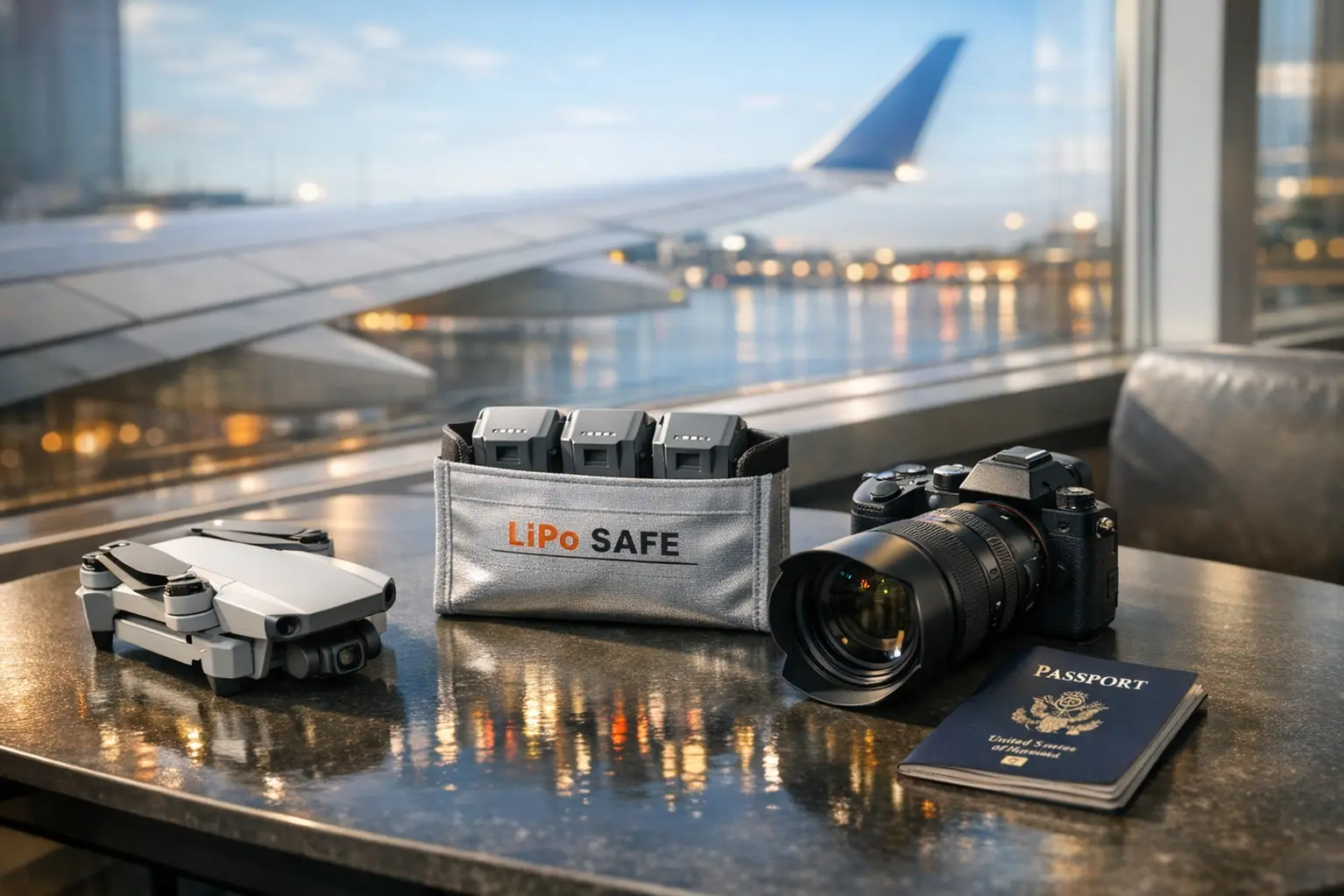
Spare lithium batteries are only allowed in carry-on luggage—not in checked bags.
This means even if you check your drone body, the batteries must stay with you in the cabin.
Airline Policies vs Country Laws
Here’s where many photographers get caught off guard.
Airline rules allow drones—but some countries restrict or even ban them entirely.
So passing airport security doesn’t mean you’re legally allowed to fly your drone at your destination.
Lithium Batteries: The Most Important Rule
If you remember only one thing from this guide, make it this:
This rule exists because lithium batteries can overheat or catch fire, and flight crews must be able to respond quickly.
Watt-Hour (Wh) Limits Explained
Airlines don’t measure batteries in mAh—they use watt-hours (Wh).
Here’s how it works:
• Under 100Wh → Allowed (most cameras & drones)
• 100–160Wh → Airline approval required (max 2)
• Over 160Wh → Not allowed on passenger planes
Most mirrorless camera batteries fall well below 100Wh, making them safe for travel. :contentReference[oaicite:3]{index=3}
Spare Batteries: What’s Allowed
Typical airline guidelines:
• Multiple small batteries allowed (personal use)
• Medium batteries limited to 2
• Must be individually protected (no loose terminals)
Camera Gear on Flights: Carry-On vs Checked
When flying with photography equipment, choosing between carry-on and checked baggage can determine whether your gear arrives safely—or not.
Why You Should NEVER Check Expensive Gear
This isn’t just advice—it’s a rule professionals live by.
Checked luggage is:
• Thrown, stacked, and compressed
• Exposed to temperature changes
• Occasionally lost
Your camera gear doesn’t belong there.
What Happens to Checked Fragile Equipment
Even with “fragile” labels, baggage handling is not gentle.
If your gear breaks in checked luggage, compensation rarely covers the real value.
Packing Your Camera Bag Like a Pro
Your camera bag isn’t just storage—it’s your first line of protection during air travel.
Best Bag Types for Air Travel
Not all camera bags are travel-friendly.
Look for:
• Compact size (fits overhead bins)
• Quick-access compartments
• Dedicated battery storage
Choosing the right bag can dramatically improve your airport experience, especially during security checks and boarding.
Here are some popular camera bag categories to consider:
Check Camera Backpack Prices
Browse Camera Backpacks
View Camera Backpack Deals
Tip: Ideal for photographers who want lightweight mobility and fast access during travel.
Check Rolling Camera Bag Prices
Browse Rolling Camera Bags
View Rolling Bag Deals
Tip: Best for heavy gear setups and long-distance travel through large airports.
Check Travel Camera Bag Prices
Browse Travel Camera Bags
View Travel Bag Deals
Tip: A balanced option for photographers who want both storage and everyday usability.
Security Screening Tips
At airport security, your bag will be scanned—and sometimes manually inspected.
Be ready to:
• Remove large electronics
• Explain unusual gear (drones, gimbals)
• Power on devices if requested
Tripods, Gimbals, and Accessories
Accessories are often overlooked, but they can create unexpected issues during air travel if not packed correctly.
Are Tripods Allowed on Planes?
Yes, but size matters.
Small travel tripods are usually allowed in carry-on, while larger ones may need to be checked.
If you’re traveling frequently, choosing a compact and lightweight tripod is essential—not just for convenience, but also to avoid airline restrictions.
When selecting a travel tripod, prioritize:
• Folded length under airline carry-on limits
• Lightweight carbon fiber construction
• Quick deployment mechanisms
Check Travel Tripod Prices
Browse Travel Tripods
View Travel Tripod Deals
Tip: Look for models that fold under 45cm for easy carry-on compatibility.
Gimbals and Stabilizers
Most gimbals are allowed, but again—the battery rules apply.
If your gimbal has a removable battery, it must be carried in your cabin bag.
Gimbals are especially useful for travel creators, vloggers, and hybrid shooters—but they should be chosen carefully for portability.
When choosing a travel-friendly gimbal, consider:
• Weight and foldability
• Battery type (built-in vs removable)
• Compatibility with your camera or smartphone
Check Gimbal Prices
Browse Camera Gimbals
View Gimbal Deals
Tip: Foldable gimbals are much easier to pack and less likely to attract attention during security checks.
Other Essential Accessories for Air Travel
Beyond tripods and gimbals, a few small accessories can make a big difference when flying with camera gear.
Smart packing of these items can improve efficiency, protect your gear, and reduce friction at airport security.
Key accessories to consider:
• Extra memory cards and storage cases
• Lens cleaning kits
• Cable organizers
• Portable SSD drives
Check Camera Accessories Prices
Browse Camera Accessories
View Accessory Deals
Tip: Small accessories are easy to forget—but they often save your shoot when traveling.
Airport Security (TSA & International)
What to Expect
Security officers are trained to look for threats—not photography gear.
But unusual electronics may trigger additional screening.
How to Avoid Delays
• Keep batteries visible and organized
• Avoid overpacking
• Be ready to explain your gear
Simple preparation can save you 10–20 minutes at security.
Airline Differences You Should Know
Budget Airlines vs Full-Service Airlines
Budget airlines often have stricter cabin size and weight limits.
This can be a bigger problem than security rules.
Cabin Restrictions
Even if your gear is allowed, it still must fit:
• Overhead bins
• Personal item limits
Always check your airline’s baggage policy before flying.
International Travel with Drone Gear
Flying internationally with drone equipment adds another layer of complexity beyond standard airline rules.
Countries That Restrict Drones
Some countries:
• Require permits
• Restrict imports
• Ban drones entirely
Always research local laws before you travel.
Customs & Legal Risks
In some cases, your drone may be confiscated at customs—even if it passed airport security.
This is one of the biggest risks drone travelers face.
Best Cameras for Travel Photography
Choosing the right camera can make travel significantly easier.
If you’re planning to upgrade your kit, check out our curated guides:
Best Cameras for Travel Photography
Best Mirrorless Cameras for Video Creators
Best Lenses for Travel Photography
Daisy’s Travel Checklist for Photographers ✈️
✔ Pack all batteries in carry-on
✔ Check watt-hour ratings before flying
✔ Use protective battery cases
✔ Keep gear organized for security
✔ Research drone laws at destination
✔ Avoid checking expensive equipment
✔ Confirm airline baggage limits
Final Thoughts: Travel Smart, Shoot Freely
Traveling with photography gear doesn’t have to be stressful.
Once you understand that batteries—not cameras—are the real concern, everything becomes easier.
Plan ahead, pack smart, and you’ll move through airports with confidence.
Because at the end of the day, the goal isn’t just to travel—it’s to arrive ready to shoot.
Frequently Asked Questions About Flying with Camera Gear
Can you bring a drone on a plane in 2026?
Yes, drones are allowed on most airlines, but the batteries must always be carried in your carry-on bag. Airline approval may be required depending on battery size.
Are camera batteries allowed in checked luggage?
No, spare lithium batteries are not allowed in checked luggage. They must be packed in your carry-on and properly protected to prevent short circuits.
What is the lithium battery limit on airplanes?
Batteries under 100Wh are generally allowed without approval. Batteries between 100Wh and 160Wh usually require airline approval, and anything above 160Wh is not permitted on passenger flights.
Can I carry my camera gear in a carry-on bag?
Yes, and it is strongly recommended. Carry-on is the safest way to transport cameras, lenses, and electronics to avoid damage, loss, or theft.
Do airports check camera equipment separately?
Sometimes. Large electronics like cameras and drones may need to be removed from your bag during security screening, depending on the airport and scanning system.
Can I travel internationally with a drone?
Yes, but you must check local laws before traveling. Some countries require permits, restrict usage, or ban drones entirely.
Are tripods allowed in carry-on luggage?
Small travel tripods are usually allowed in carry-on, but larger models may need to be checked depending on airline size restrictions.
How should I pack camera batteries for a flight?
Batteries should be stored in protective cases or with terminals covered. Always pack them in your carry-on bag and keep them easily accessible for security checks.