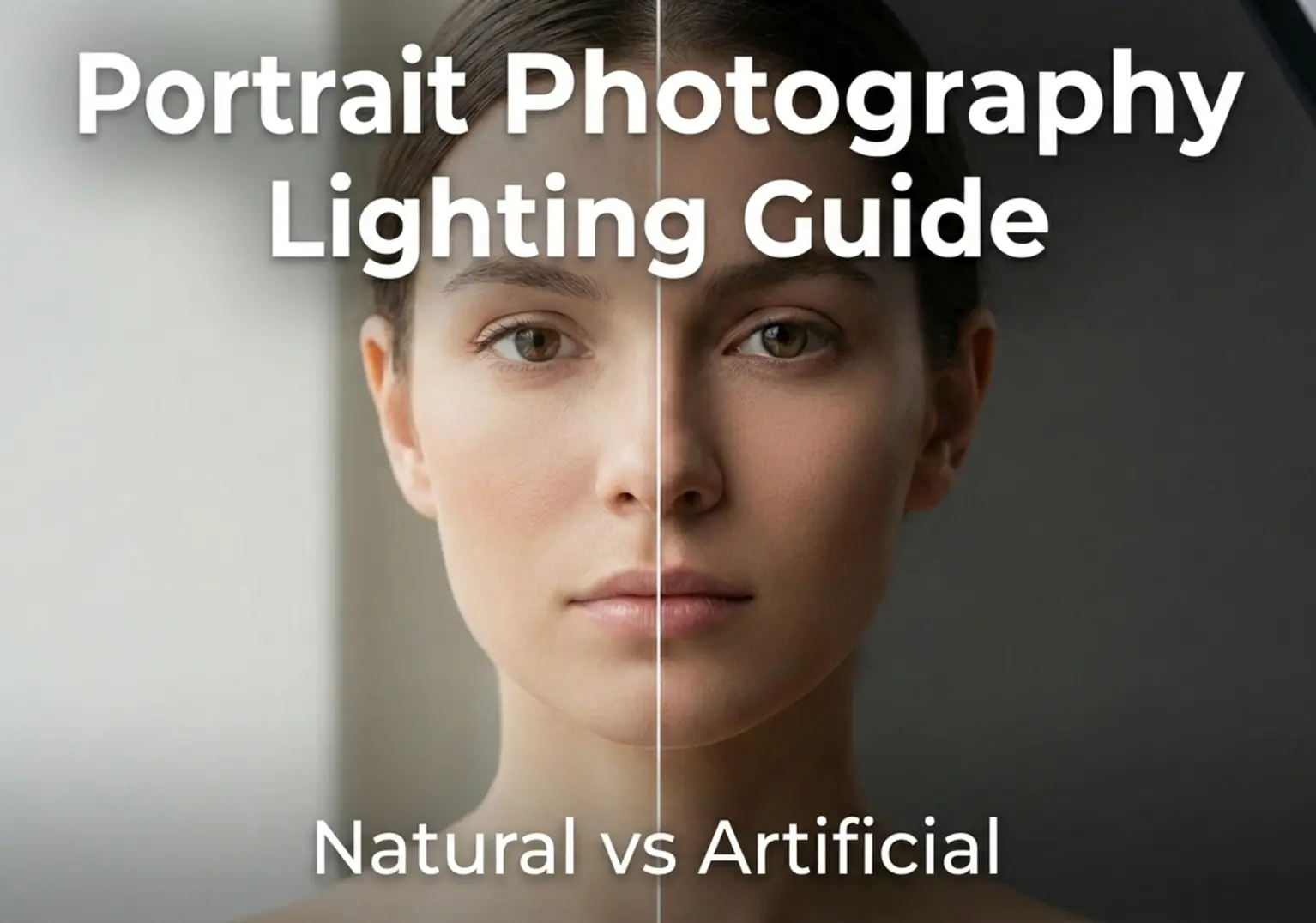
Portrait photography lighting is one of the most confusing topics for photographers because the results change dramatically depending on whether you use natural light or artificial lighting. Simple window light can produce soft, flattering portraits with almost no equipment, while artificial lights allow precise control over direction, intensity, and consistency. The lighting choice you make directly affects skin tones, subject separation, and how professional your portraits ultimately look.
This Portrait Photography Lighting Guide explains the real differences between natural vs artificial lighting, shows when each option makes sense, and helps you choose the right setup based on your shooting environment, budget, and experience level. Whether you photograph portraits at home, outdoors, or in a studio, understanding light will improve your results more than upgrading your camera or lens.
Who This Guide Is For
This guide is designed for beginner portrait photographers who want to understand lighting without getting overwhelmed by technical jargon or expensive studio setups. If you are still learning how light affects skin tones, facial features, and background separation, this article builds a solid foundation before you invest in more advanced gear.
It is also ideal for photographers who primarily rely on natural light portrait photography and shoot using window light, open shade, or outdoor environments. If you already understand basic exposure settings but struggle to get consistent results, pairing this guide with our best camera settings for portrait photography will help you control both light and camera behavior more confidently.
Finally, this guide is for anyone confused about the difference between window light and artificial lighting for portraits. If you are unsure when to stick with natural light, when to introduce flashes or LED lights, or how lighting choices affect lens selection, this article connects naturally with our Portrait Photography Essentials hub and the best portrait lenses guide to give you a complete, practical workflow.
Natural Light Portrait Photography (Pros & Cons)
Natural light portrait photography refers to using existing light sources such as sunlight, window light, or open shade to illuminate your subject. Unlike artificial lighting, natural light is not controlled by the photographer, which makes understanding its behavior—direction, softness, and timing—essential for creating flattering and professional-looking portraits.
What Is Natural Light in Portraits?
In portrait photography, natural light simply means any light that already exists in the scene without the use of flashes or continuous lights. This includes window light indoors, shaded outdoor areas, and direct or diffused sunlight. Because it reacts naturally with skin tones, natural light is often preferred for lifestyle, editorial, and emotional portrait styles.
Best Times & Directions for Natural Light
The quality of natural light for portraits depends heavily on both time and direction. Soft, flattering light is usually found during the golden hour—shortly after sunrise or before sunset—while harsh midday sun can create strong shadows and contrast. Indoors, side-facing window light typically produces more depth and dimension than flat front lighting.
Pros & Cons of Natural Light
The biggest advantage of natural light portrait photography is its simplicity and authenticity. It requires minimal gear and encourages photographers to focus on composition, expression, and timing. On the downside, natural light is inconsistent—weather, location, and time of day can drastically change your results, making repeatable setups difficult.
These limitations are often what push photographers to explore artificial lighting for portrait photography, especially when consistency and creative control become more important than convenience.
Artificial Lighting for Portrait Photography
Artificial lighting for portrait photography gives you full control over light direction, intensity, and consistency. Unlike natural light portraits, artificial light allows you to shoot at any time of day, in any location, and recreate the same look repeatedly—which is why it’s essential for studio portraits, commercial work, and controlled indoor setups.
Flash vs Continuous Light (Quick Overview)
The first decision most beginners face is choosing between flash lighting and continuous lighting. Flash (strobe) lights produce a short, powerful burst that freezes motion and delivers maximum image quality. Continuous lights stay on constantly, making exposure and shadows easier to understand because what you see is what you get.
If you’re moving from window light portrait photography, continuous lighting often feels more intuitive at first, while flash becomes far more powerful once you understand light shaping and exposure control.
Studio Lights vs Speedlights
Studio lights are larger, more powerful, and designed for consistent portrait sessions in controlled environments. Speedlights are compact flashes that can be mounted on-camera or used wirelessly off-camera, making them ideal for beginners, small spaces, and location portrait photography.
Many photographers start with speedlights for flexibility and budget reasons, then upgrade to studio strobes as their lighting needs become more demanding.
Check Portrait Lighting Kits on Amazon
Tip: A basic off-camera flash kit or entry-level LED light is the safest starting point for learning artificial portrait lighting.
Pros & Cons of Artificial Lighting
The biggest advantage of artificial lighting in portrait photography is control. You decide the light direction, softness, and mood—regardless of weather or time of day. This makes artificial light essential for professional and repeatable results.
The main drawback is complexity. Artificial lighting requires more gear, setup time, and learning. However, once mastered, it completely removes the limitations of natural light and dramatically expands your creative options.
Natural vs Artificial Lighting (Quick Comparison)
| Criteria | Natural Light | Artificial Light |
|---|---|---|
| Setup Speed | Very fast Just find good light |
Slower Lights, modifiers, power |
| Consistency | ❌ Changes with time & weather | ✅ Same result every shot |
| Creative Control | Limited | High (direction, power, mood) |
| Learning Curve | Beginner-friendly | Steeper but rewarding |
| Best For | Lifestyle, casual portraits | Studio, commercial work |
Best Lighting Setups by Use Case
Not every portrait photographer needs a full studio. Below are the most practical portrait lighting setups based on experience level, budget, and shooting environment, so you can choose the right light without overbuying gear.
Best Lighting for Beginner Portraits (Natural Light Setup)
For beginners, natural light portrait photography is the easiest and most forgiving way to learn lighting fundamentals, especially when working with window light that creates soft, directional illumination.
- Large window (north-facing if possible)
- Sheer curtain to diffuse harsh sunlight
- White wall or reflector opposite the window
👉 Optional upgrade: A simple 5-in-1 reflector helps control contrast and fill shadows while keeping your setup minimal.
Best Affordable Artificial Lighting Setup
If you want to move beyond daylight, an affordable artificial lighting setup built around a continuous LED light is the safest starting point because the light output is visible in real time.
- 1× Bi-color LED light
- Softbox or umbrella modifier
- Light stand
This setup is ideal for photographers who want consistent indoor results without learning flash power ratios or wireless triggering.
👉 Best value option: Entry-level LED lighting kits designed for portraits and small home studios.
Best Lighting for Indoor Portrait Photography
For maximum control indoors, a one-light flash setup offers the best balance between power, flexibility, and long-term scalability.
- 1× Speedlight (off-camera)
- Wireless flash trigger
- Softbox or octabox
This setup works in small rooms and larger spaces alike while giving you full authority over exposure, contrast, and subject separation.
👉 Most versatile choice: A speedlight + trigger + softbox combo that grows with your skills.
Common Portrait Lighting Mistakes (And How to Fix Them)
Even experienced photographers struggle with lighting mistakes that quietly ruin otherwise strong portraits, so recognizing these issues early helps you improve faster with less gear.
Harsh Shadows
Harsh shadows usually happen when the light source is too small, too close, or positioned directly above the subject, creating unflattering contrast on facial features.
How to fix it: Increase the light size by using a softbox, umbrella, or sheer curtain, and move the light slightly to the side to create softer transitions.
Flat Light
Flat lighting occurs when light hits the subject straight-on, eliminating shadows and depth, which makes portraits look lifeless and two-dimensional.
How to fix it: Place the light at a 45-degree angle to the subject and slightly above eye level to introduce natural facial contours.
Bad Color Temperature
Incorrect color temperature often shows up as unnatural skin tones caused by mixing daylight, tungsten, and LED sources in the same scene.
How to fix it: Stick to one light source type or use bi-color lights and set a custom white balance in-camera for consistent color.
Final Recommendation
If you shoot mostly in daylight, natural window light plus a reflector is a clear buy and anything more is easy to skip. For indoor or evening portraits, a basic LED kit is worth buying, while complex multi-light setups can wait. If you want full creative control long-term, investing in a one-light flash setup is the smartest upgrade path.
FAQ
Is natural light better than artificial light for portraits?
Natural light is easier for beginners and produces flattering results, but artificial light offers consistency and control regardless of time or location.
What is the best lighting setup for beginner portrait photography?
A window light setup with a reflector is the best starting point because it teaches light direction, softness, and shadow control without technical complexity.
Do I need flash for indoor portrait photography?
Flash is not mandatory, but it provides stronger output and greater flexibility than continuous light in small or dim indoor spaces.