Choosing the best portrait lens is one of the most important decisions in portrait photography. The right lens affects how faces look, how backgrounds blur, and how much creative control you have over your images.
Among photographers, the debate usually comes down to three main options: 50mm prime lenses, 85mm prime lenses, and zoom lenses. Each offers a different balance of perspective, background separation, flexibility, and price.
If you’ve already explored the fundamentals of portrait photography — including lighting, camera settings, and composition — this guide will help you make a confident lens choice. If not, you may want to start with our complete Portrait Photography Essentials guide before deciding.
In this article, we’ll compare 50mm vs 85mm portrait lenses, examine when zoom lenses make sense for portraits, and help you choose the best portrait lens based on your shooting style, space, and budget.
By the end, you’ll know exactly which portrait lens fits your needs — whether you’re just starting out or upgrading your gear.
Best Portrait Lenses — Quick Overview
While 50mm and 85mm prime lenses dominate portrait photography, modern zoom lenses can also be excellent choices in the right situations. Each option creates a different look, affects subject comfort, and changes how you work on set.
This quick overview compares the three most popular portrait lens types so you can immediately see which focal length fits your shooting style before diving into detailed recommendations.
| Lens Type | Best For | Look & Compression | Typical Aperture | Limitations |
|---|---|---|---|---|
| 50mm Prime | Beginners, environmental portraits, small studios | Natural perspective, moderate background blur | f/1.8 – f/1.4 | Less subject compression than longer lenses |
| 85mm Prime | Classic headshots, professional portraits | Flattering compression, strong subject separation | f/1.8 – f/1.4 | Requires more shooting distance |
| Portrait Zoom (e.g. 24–70mm, 70–200mm) |
Versatility, events, fast-paced sessions | Flexible framing, controlled background blur | f/2.8 – f/4 | Heavier and usually more expensive |
50mm Portrait Lenses — Affordable & Versatile
The 50mm lens is often called the “nifty fifty” — and for good reason. It’s affordable, lightweight, and capable of producing professional-looking portraits without forcing you to radically change how you shoot.
For many photographers, a 50mm lens is the first step into shallow depth of field, natural-looking compression, and subject isolation — especially when upgrading from a kit zoom.
Why 50mm Is Great for Portrait Photography
On full-frame cameras, 50mm offers a perspective close to what the human eye naturally sees. This makes portraits feel honest and immersive, without exaggerated facial distortion.
- Wide apertures (typically f/1.8 or f/1.4) allow strong background blur
- Compact and lightweight, ideal for handheld shooting
- Excellent low-light performance for indoor portraits
- Budget-friendly entry point into prime lenses
On APS-C cameras, a 50mm lens behaves more like a short telephoto (around 75mm equivalent), making it even more flattering for head-and-shoulder portraits.
Who Should Choose a 50mm Lens?
A 50mm portrait lens is an excellent choice if you:
- Are new to portrait photography and want a safe, flexible focal length
- Shoot in small rooms or home studios
- Prefer environmental portraits with some background context
- Want strong image quality without investing heavily in gear
While 50mm lenses may not offer the extreme compression of an 85mm, they shine in versatility — allowing you to shoot portraits, lifestyle images, and even street photography with the same lens.
Check 50mm Portrait Lens Prices on Amazon
View 50mm Portrait Lenses at B&H Photo
Tip: f/1.8 versions offer the best balance of price, sharpness, and portability for most photographers.
85mm Portrait Lenses — Classic Compression & Subject Isolation
The 85mm lens is widely considered the gold standard for portrait photography. Its longer focal length creates flattering compression, smooth background blur, and natural-looking facial proportions — making it a favorite among professional portrait, fashion, and wedding photographers.
If your goal is to separate your subject cleanly from the background and achieve a timeless, high-end portrait look, an 85mm lens delivers results that are difficult to replicate with shorter focal lengths.
Why 85mm Is the Gold Standard for Portraits
An 85mm lens allows you to step back slightly from your subject while maintaining tight framing. This distance creates a more comfortable shooting experience and produces flattering perspective — especially for headshots and half-body portraits.
- Strong subject compression that flatters facial features
- Exceptional background separation even at moderate apertures
- Minimal distortion, ideal for close-up portraits
- Professional aesthetic commonly used in studio and outdoor portrait work
On APS-C cameras, 85mm behaves like a 130mm equivalent, making it better suited for outdoor portraits or larger studio spaces.
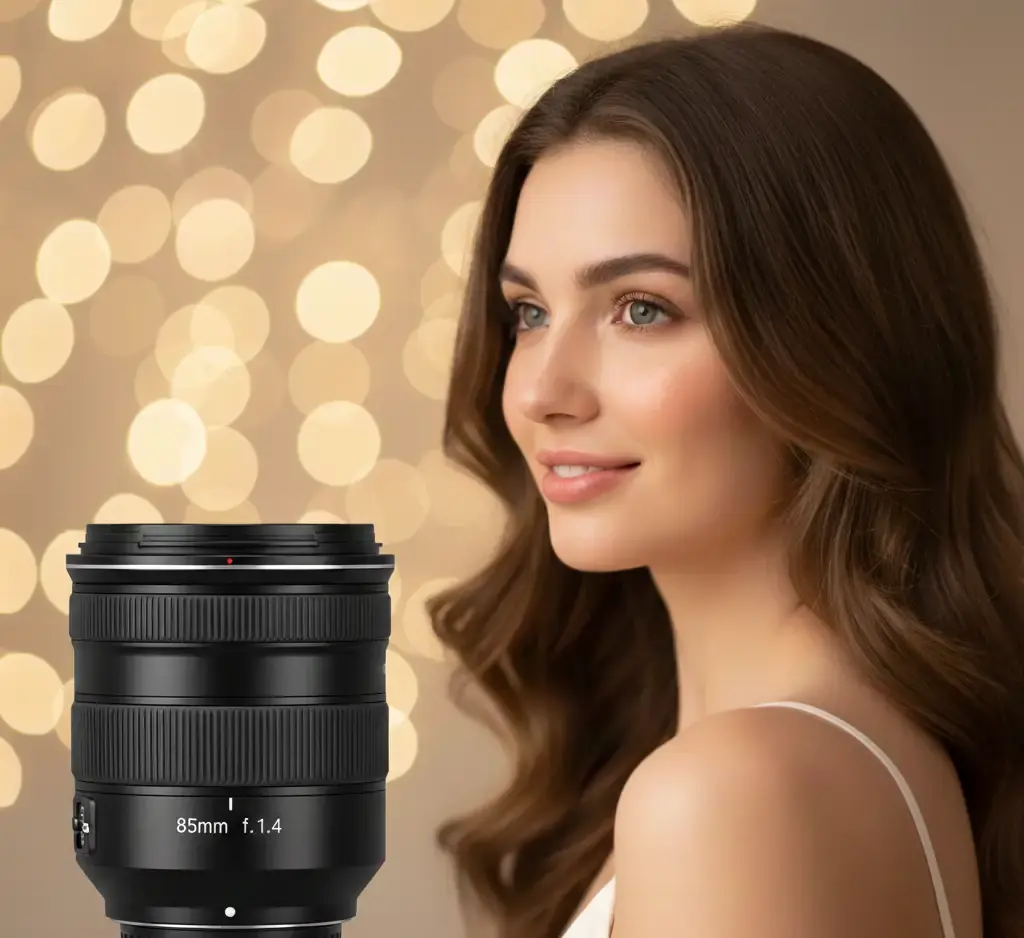
85mm vs 50mm for Background Blur
While both 50mm and 85mm lenses can create shallow depth of field, they do so in different ways:
- 85mm lenses compress the background more, making it appear smoother and closer
- 50mm lenses include more environmental context, even at wide apertures
- At similar apertures, 85mm produces creamier bokeh with less distraction
If background blur and subject isolation are your top priorities, the 85mm lens has a clear advantage. If flexibility and tighter spaces matter more, a 50mm remains the better all-around choice.
View 85mm Portrait Lenses at B&H Photo
Tip: f/1.8 models offer excellent image quality at a fraction of the price of f/1.4 versions.
Zoom Lenses for Portrait Photography
While prime lenses dominate traditional portrait photography, modern zoom lenses have become a powerful alternative — especially for photographers who value flexibility, speed, and framing control.
Zoom lenses won’t always match the extreme background blur of an 85mm f/1.4 prime, but in many real-world portrait scenarios, they offer better workflow, consistency, and versatility.
When Zoom Lenses Make Sense
Zoom lenses are an excellent choice for portrait photographers who work in dynamic environments or shoot multiple styles in one session.
- Event & lifestyle portraits where you can’t constantly change position
- Weddings & ceremonies with unpredictable moments
- Environmental portraits that benefit from flexible framing
- Hybrid shooters combining photo and video
A high-quality zoom allows you to adjust composition instantly without interrupting your connection with the subject — a subtle but important advantage during portrait sessions.
24–70mm vs 70–200mm for Portraits
These two zoom ranges serve very different portrait purposes:
- 24–70mm f/2.8 is ideal for environmental portraits, group shots, and tighter indoor spaces
- 70–200mm f/2.8 excels at subject isolation, flattering compression, and candid-style portraits
The 24–70mm offers storytelling flexibility, while the 70–200mm delivers a more polished, cinematic portrait look — often rivaling prime lenses in background separation.
View Portrait Zoom Lenses at B&H Photo
Tip: A 70–200mm f/2.8 is often the most versatile portrait zoom for professionals.
Prime vs Zoom Lenses for Portraits
Choosing between a prime and a zoom lens for portrait photography comes down to one core question: Do you value maximum image quality and simplicity, or flexibility and speed?
Both options are capable of producing professional-level portraits — but they encourage very different shooting styles.
| Feature | Prime Lenses | Zoom Lenses |
|---|---|---|
| Maximum Aperture | Wider (f/1.8 – f/1.4) | Narrower (f/2.8 – f/4) |
| Background Blur | Stronger subject isolation | Very good, but less extreme |
| Flexibility | Single focal length | Multiple focal lengths in one lens |
| Weight & Size | Lighter, more compact | Heavier and bulkier |
| Best Use Case | Controlled portrait sessions | Events, lifestyle, fast-paced shoots |
How to Choose the Right Portrait Lens (Based on Your Style & Budget)
If you’re still undecided, use the guide below to match your shooting style, space, and budget with the right portrait lens.
- Choose a 50mm prime if you shoot in small spaces, want versatility, and are building your first portrait kit.
- Choose an 85mm prime if your priority is subject isolation, flattering compression, and classic portrait aesthetics.
- Choose a 24–70mm zoom if you shoot environmental portraits, groups, or mixed photo/video sessions.
- Choose a 70–200mm zoom if you shoot events, weddings, or want maximum compression without switching lenses.
There is no “best portrait lens” for everyone — only the lens that fits how you work and what you shoot.
Common Portrait Lens Mistakes
Even with the right equipment, certain lens-related mistakes can quickly limit the impact of your portrait photography. Avoiding these common errors will instantly improve both image quality and subject connection.
- Using lenses that are too wide
Ultra-wide focal lengths exaggerate facial features and distort proportions — rarely flattering for portraits unless used intentionally for creative effect. - Shooting at the wrong distance
Stepping too close with a short focal length changes perspective and can make faces appear unnatural. Lens choice and subject distance must work together. - Obsessing over “maximum bokeh”
Background blur alone doesn’t make a strong portrait. Expression, light, and composition matter far more than shooting wide open at all times.
Where to Go Next? (Portrait Photography Essentials)
If you want to build a complete portrait photography workflow — from gear selection to lighting and camera settings — these guides will help you level up faster and avoid costly mistakes.
- Portrait Photography Essentials (Complete Guide)
The main hub covering lenses, lighting, techniques, and creative decisions for modern portrait photography. - Portrait Photography Lighting Guide
Learn how natural and artificial light shape mood, depth, and expression in portraits. - Camera Settings for Portrait Photography
Master aperture, shutter speed, and ISO for consistent, professional-looking portraits.
Frequently Asked Questions About Portrait Lenses
What is the best focal length for portrait photography?
The most popular focal lengths for portrait photography are 50mm and 85mm. A 50mm lens offers versatility and works well in smaller spaces, while an 85mm lens provides flattering compression and stronger background blur for classic portraits.
Is 85mm better than 50mm for portraits?
An 85mm lens is generally better for headshots and subject isolation, while a 50mm lens is more flexible for environmental portraits and tighter shooting spaces. Neither is universally better — the right choice depends on your style and available space.
Can zoom lenses be used for portrait photography?
Yes. Zoom lenses like 24–70mm f/2.8 and 70–200mm f/2.8 are widely used for portraits, especially in events, weddings, and lifestyle photography where flexibility and speed matter.
Do I need an f/1.4 lens for portraits?
No. While f/1.4 lenses offer extreme background blur, f/1.8 lenses deliver excellent portrait quality at a much lower cost. Lighting, composition, and subject connection matter more than maximum aperture.
What lens should beginners choose for portrait photography?
For beginners, a 50mm f/1.8 lens is often the best starting point. It’s affordable, lightweight, and capable of producing professional-looking portraits on both full-frame and APS-C cameras.



[…] sharpness, strong eye autofocus performance, and beautiful skin tones when paired with high-quality portrait lenses. However, full frame cameras still offer advantages in background separation, low-light […]