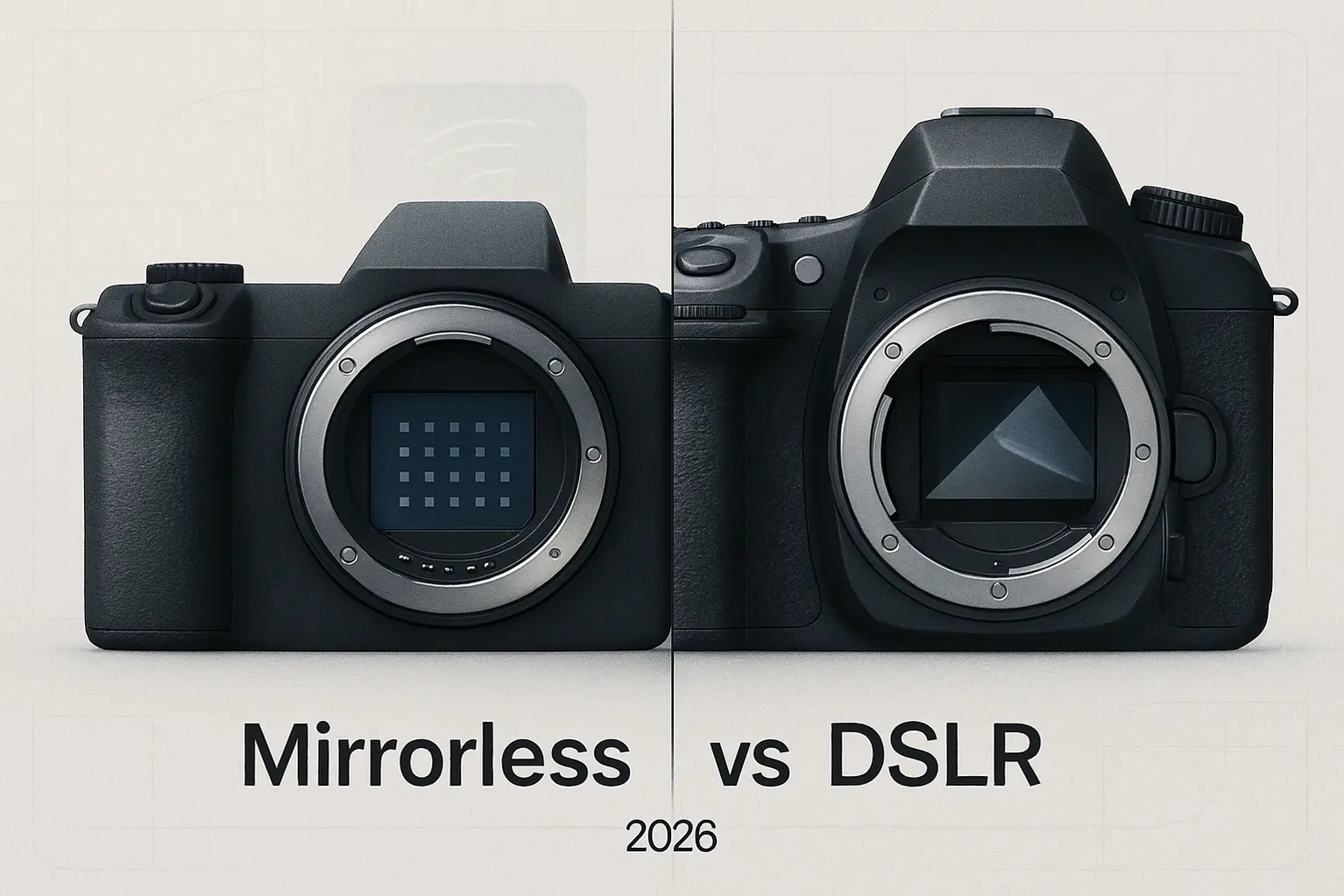
The mirrorless vs DSLR debate has been around for more than a decade — but in 2026, the question is no longer about trends. It’s about which camera system actually makes sense today.
With mirrorless cameras now dominating new releases, AI-powered autofocus becoming the norm, and major brands shifting their long-term roadmaps, many photographers and creators are asking the same thing: Is mirrorless really better than DSLR in 2026?
In this detailed mirrorless vs DSLR comparison, we break down everything that matters right now — from autofocus and image quality to video performance, lens ecosystems, battery life, and long-term system investment. Whether you’re a beginner choosing your first camera or an experienced shooter considering an upgrade, this guide is designed to help you make a confident decision.
If you’re already leaning toward mirrorless, you may also want to explore our Ultimate Mirrorless Camera Guide, where we break down the major systems, mounts, and buying paths for 2026.
This guide has been reviewed and updated for 2026 to reflect the current state of mirrorless and DSLR systems.
What’s the Difference Between Mirrorless and DSLR Cameras?
At their core, mirrorless and DSLR cameras differ in how they handle light and focus — and that single design choice affects everything from size and autofocus speed to video performance and future system support.
How DSLR Cameras Work
DSLR cameras use a mechanical mirror to reflect light from the lens up into an optical viewfinder. When you press the shutter, the mirror flips up, exposing the sensor to light. This design defined digital photography for decades and is still appreciated for its optical clarity and battery efficiency.
How Mirrorless Cameras Work
Mirrorless cameras remove the mirror entirely. Light goes directly to the image sensor, which feeds a live view to an electronic viewfinder (EVF) or rear screen. This allows for faster autofocus, real-time exposure preview, and advanced AI-driven features that simply aren’t possible with traditional DSLR designs.
Mirrorless vs DSLR: Key Differences at a Glance
| Feature | Mirrorless | DSLR |
|---|---|---|
| Viewfinder | Electronic (EVF) | Optical (OVF) |
| Autofocus | On-sensor AF with AI tracking | Phase-detect module (limited in live view) |
| Body Size & Weight | Smaller & lighter | Larger & heavier |
| Video Performance | Excellent (4K/8K, eye AF, log profiles) | Limited on most models |
| Battery Life | Shorter (EVF always on) | Longer |
| Future Development | Actively evolving | Largely discontinued |
Autofocus Performance: Mirrorless vs DSLR (2026 Reality)
Autofocus is where the gap between mirrorless and DSLR cameras has become impossible to ignore. In 2026, autofocus performance is no longer just about speed — it’s about intelligence, subject awareness, and reliability across both photo and video.
Mirrorless Autofocus: AI-Driven Precision
Modern mirrorless cameras use on-sensor phase-detection autofocus combined with AI processors. This allows them to recognize and track faces, eyes, animals, birds, vehicles, and even insects — in real time.
- Eye AF works across nearly the entire frame
- Subject tracking remains locked even during burst shooting
- Same AF performance for both photo and video
- Real-time exposure + focus preview via EVF
Cameras like the Sony A7 V, Canon EOS R6 Mark III, and Nikon Z6 III can track a moving subject from edge to edge — something DSLRs were never designed to do.
DSLR Autofocus: Fast, but Limited
DSLRs rely on a separate phase-detection module located beneath the mirror. While this system can be fast and reliable for traditional photography, it has important limitations.
- AF points are clustered near the center
- Tracking accuracy drops in live view
- No advanced AI subject recognition
- Video autofocus is noticeably weaker
Once the mirror flips up for live view or video, most DSLRs switch to slower contrast-based autofocus — a major disadvantage in modern hybrid shooting.
Real-World Verdict
If you shoot sports, wildlife, events, portraits, or video, mirrorless autofocus delivers a clear and measurable advantage. DSLRs can still perform well in controlled environments, but they no longer represent the cutting edge of focus technology.
Image Quality & Sensors: Is There Still a Difference?
For years, one of the strongest arguments in the mirrorless vs DSLR debate was image quality. Larger bodies, optical viewfinders, and dedicated AF modules gave DSLRs a reputation for superior results — but in 2026, that gap has effectively disappeared.
Sensor Technology: Mirrorless Has Caught Up — and Moved Ahead
Both mirrorless and DSLR cameras now use highly advanced CMOS sensors, often developed by the same manufacturers. In fact, many modern mirrorless sensors are newer generations than those found in legacy DSLR bodies.
- Higher dynamic range in shadows and highlights
- Improved low-light performance and ISO handling
- Faster sensor readout for burst shooting and video
- Backside-illuminated (BSI) and stacked sensor designs
Flagship mirrorless cameras now deliver image quality that equals — and often exceeds — what DSLRs were capable of at their peak.
Color Science & File Flexibility
Color rendering is no longer tied to camera type, but to brand philosophy and processing engines. Canon, Nikon, and Sony all produce excellent JPEG colors and highly flexible RAW files across both DSLR and mirrorless systems.
Where mirrorless cameras pull ahead is consistency. What you see in the electronic viewfinder is what you get in the final image — including exposure, white balance, and picture profile.
Mechanical Limitations vs Modern Design
DSLRs are still constrained by mirrors and shutters. Mirrorless cameras eliminate these components, allowing for:
- Silent shooting with electronic shutters
- Higher burst rates without mirror blackout
- Better alignment between sensor and lens mount
This design freedom translates into sharper results, especially with modern lenses designed specifically for mirrorless mounts.
Video Capabilities: Why Mirrorless Dominates in 2026
If there is one area where the mirrorless vs DSLR debate is no longer competitive, it’s video. In 2026, mirrorless cameras have completely taken over the hybrid photo-video space — while DSLRs have effectively stepped aside.
Autofocus for Video: A Generational Gap
Modern mirrorless cameras use on-sensor phase-detection autofocus, allowing continuous, accurate AF during video recording. This enables features that DSLRs simply cannot match:
- Face and eye detection for humans and animals
- Real-time subject tracking
- Smooth focus transitions for cinematic footage
DSLRs rely on contrast-based autofocus in live view, which results in slower focus, visible hunting, and unreliable tracking — a major limitation for modern content creators.
Resolution, Frame Rates & Codecs
Mirrorless cameras now routinely offer advanced video specs that were once reserved for cinema cameras:
- 4K at high frame rates (60p and beyond)
- 10-bit internal recording
- Log profiles for color grading
- Advanced codecs with lower compression artifacts
By comparison, most DSLRs are limited to basic 4K (or even 1080p), lack modern color profiles, and offer far fewer recording options.
Thermal Design & Long Recording Sessions
Early mirrorless cameras struggled with overheating, but in 2026 this is no longer a widespread issue. Newer bodies feature improved heat dissipation, optimized processors, and software limits designed for long-form recording.
DSLRs, on the other hand, were never engineered with video as a priority — making them less reliable for extended video use.
If video is your primary focus, you may want to explore our dedicated guide to the Best Vlogging Cameras of 2025, where we rank the top mirrorless options for creators.
Autofocus Performance: Speed, Accuracy & AI Tracking
Autofocus performance is one of the most important factors separating mirrorless vs DSLR cameras in 2026. While DSLRs were once the gold standard for fast and reliable autofocus, mirrorless systems have not only caught up — they have surpassed them.
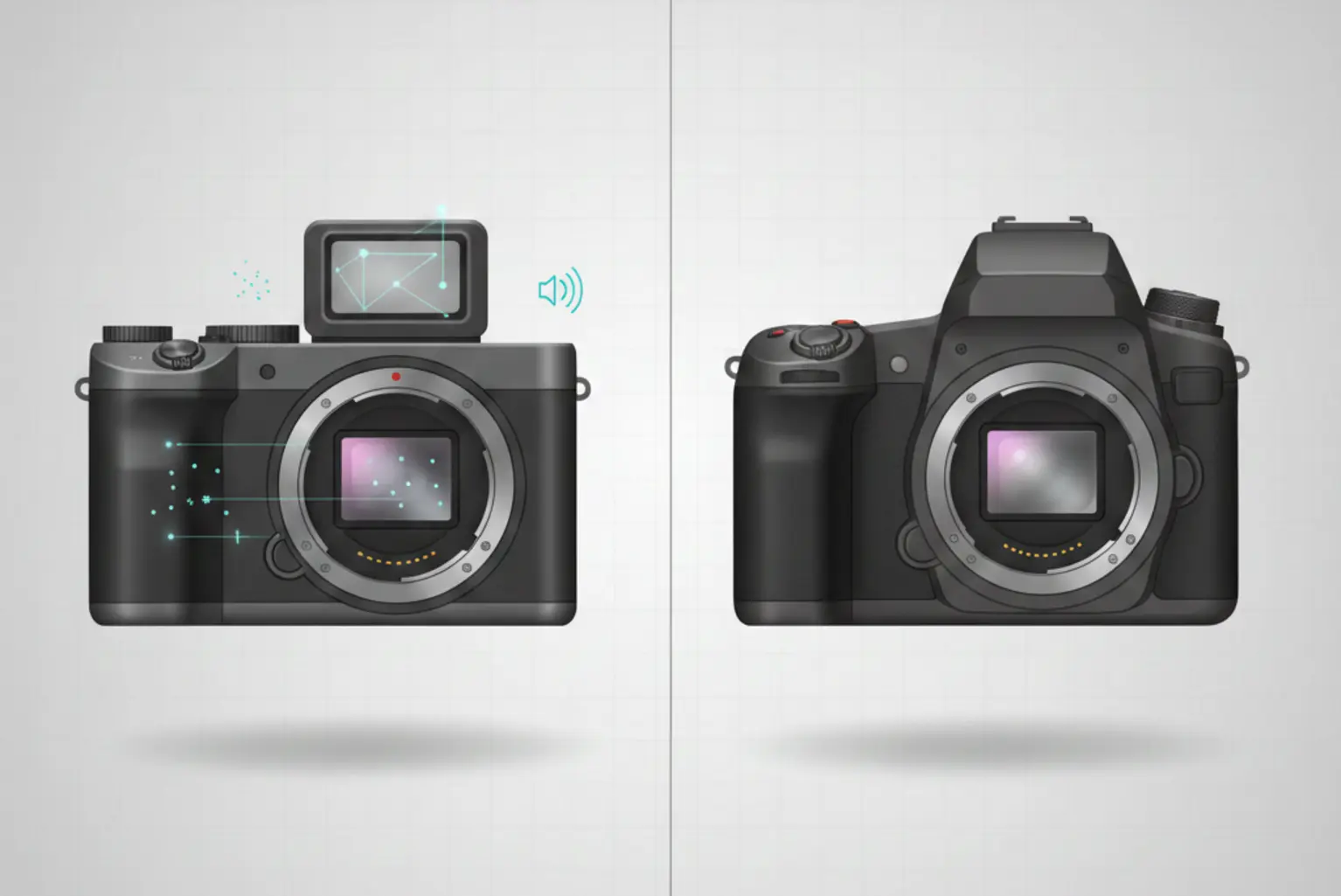
How Autofocus Works: Dedicated Modules vs On-Sensor AF
DSLRs use a separate phase-detection autofocus module that sits beneath the mirror. While this system is fast for still photography, it comes with limitations:
- Autofocus accuracy depends on mirror alignment
- AF performance drops in live view and video
- No real-time exposure preview while focusing
Mirrorless cameras use on-sensor phase-detection AF, meaning the same sensor that captures the image is also responsible for focusing. This results in:
- More accurate focus across the entire frame
- No calibration issues between AF and sensor
- Consistent performance for both photo and video
AI Subject Detection & Tracking
In 2026, autofocus is no longer just about speed — it’s about intelligence. Modern mirrorless cameras now feature AI-powered subject recognition capable of identifying:
- Human eyes, faces, and bodies
- Animals and birds in flight
- Vehicles, trains, and aircraft
These systems track subjects in real time, even when they briefly leave the frame or change direction — something DSLRs were never designed to handle.
Low-Light & Action Performance
Mirrorless autofocus systems also perform exceptionally well in low light, thanks to improved sensor sensitivity and smarter algorithms. This is especially noticeable for:
- Wildlife and sports photography
- Event and wedding shooting
- Street photography at night
While professional DSLRs can still deliver fast autofocus for action photography, they lack the flexibility, coverage, and subject recognition found in modern mirrorless cameras.
Size, Weight & Handling: Ergonomics Compared
One of the most visible differences in the mirrorless vs DSLR debate is physical design. Mirrorless cameras are often described as smaller and lighter — but does that always translate into better handling in 2026?
Body Size & Weight: Travel-Friendly vs Traditional Balance
By removing the mirror box and optical viewfinder, mirrorless cameras can be built with shorter flange distances and more compact bodies. This results in:
- Lighter camera bodies for everyday carry
- Smaller camera bags and travel kits
- Less fatigue during long shooting sessions
For travel, street, and content creation, this size advantage is a major reason why many photographers have switched to mirrorless systems.
DSLRs, on the other hand, are typically larger and heavier. While this can feel outdated for casual shooting, some photographers still appreciate the added weight — especially when balancing large telephoto lenses.
Grip & Button Layout
Early mirrorless cameras were sometimes criticized for shallow grips and cramped controls. In 2026, that concern has largely disappeared. Modern mirrorless bodies now feature:
- Deeper grips comparable to DSLRs
- Customizable buttons and dials
- Touchscreens combined with physical controls
DSLRs still offer excellent ergonomics, particularly for photographers who prefer traditional layouts and muscle memory developed over years of shooting.
Electronic vs Optical Viewfinders
The optical viewfinder is one of the last strongholds of DSLR loyalty. Some photographers still prefer the natural, lag-free view of an optical finder — especially in bright outdoor conditions.
However, electronic viewfinders (EVFs) in modern mirrorless cameras now offer key advantages:
- Real-time exposure and white balance preview
- Focus peaking and zebras
- Magnified manual focus assistance
For learning photographers and hybrid shooters, EVFs significantly reduce guesswork and speed up the shooting process.
Lens Ecosystems & System Longevity
When comparing mirrorless vs DSLR in 2026, camera bodies matter — but lens ecosystems matter even more. Choosing a system is a long-term investment, and this is where mirrorless cameras have gained a decisive advantage.
Mirrorless Lens Development Is the Priority
All major manufacturers — Canon, Nikon, Sony, Fujifilm, and Panasonic — are now focusing their research and development almost entirely on mirrorless lenses. This shift has led to:
- Faster lenses with improved optical designs
- Shorter flange distances enabling sharper corner performance
- Better autofocus motors optimized for photo and video
- More compact lens designs without sacrificing quality
In contrast, DSLR lens lineups are effectively frozen. While existing DSLR lenses are still excellent, very few — if any — new DSLR lenses are being developed.
Adapting DSLR Lenses to Mirrorless
One of the strongest arguments in favor of mirrorless systems is backward compatibility. Most mirrorless mounts support official adapters that allow photographers to use their existing DSLR lenses with minimal compromise.
- Autofocus and image stabilization remain fully functional
- No optical quality loss with official adapters
- A smooth transition path for long-time DSLR users
This means switching to mirrorless does not require replacing your entire lens collection overnight — a key consideration for professionals and enthusiasts alike.
Future-Proofing Your Investment
In 2026, system longevity favors mirrorless cameras. Firmware updates, new lens releases, and third-party support are overwhelmingly focused on mirrorless mounts.
DSLR systems remain usable and reliable, but they are no longer the center of innovation. For photographers planning to invest over the next five to ten years, mirrorless systems offer a clearer growth path.
For a deeper breakdown of how modern mirrorless mounts compare, see our Ultimate Mirrorless Camera Guide, where we analyze each ecosystem in detail.
Battery Life & Reliability
Battery life has long been considered a strong advantage for DSLRs in the mirrorless vs DSLR discussion. Optical viewfinders consume no power, allowing DSLRs to achieve impressive shot counts — but how relevant is this advantage in 2026?
Battery Performance in Real-World Use
It’s true that DSLRs often deliver higher CIPA-rated shot counts per charge. However, these ratings don’t always reflect real-world shooting patterns — especially for hybrid shooters.
Modern mirrorless cameras have closed much of the gap thanks to:
- More efficient processors
- Larger battery designs in newer bodies
- USB-C charging and power delivery
For many photographers, the ability to charge mirrorless cameras via power banks, laptops, or car chargers offsets their lower per-charge shot counts.
Reliability & Professional Use
Both mirrorless and DSLR cameras are now highly reliable tools. Weather sealing, magnesium alloy bodies, and durable shutters are standard across mid-range and professional models.
Concerns about mirrorless durability were more relevant a decade ago. In 2026, flagship mirrorless cameras are used daily by:
- Wedding and event photographers
- Wildlife and sports shooters
- Documentary and news professionals
DSLRs still offer proven mechanical reliability, but mirrorless systems have demonstrated that fewer moving parts can also mean fewer mechanical failure points.
Cold Weather & Extreme Conditions
Battery performance in cold environments remains a challenge for all digital cameras. While DSLRs may retain a slight edge due to optical viewfinders, mirrorless users can mitigate this by carrying spare batteries and keeping them warm.
Which Should You Choose in 2026? Mirrorless vs DSLR
At this point in the mirrorless vs DSLR debate, the question is no longer about which technology is better — it’s about which system fits your shooting style, goals, and future plans.
In 2026, both camera types can deliver excellent image quality. The real difference lies in how you shoot, what you shoot, and where you want your system to take you next.
Choose Mirrorless If You:
- Want the latest autofocus, AI tracking, and video features
- Shoot hybrid photo + video content
- Value compact size, lighter lenses, and portability
- Plan to invest in a system that will keep evolving
- Create content for YouTube, social media, or professional video
Mirrorless cameras dominate new product launches and lens development. If you’re buying into a system today, mirrorless offers the most future-proof path.
Choose DSLR If You:
- Already own multiple DSLR bodies and lenses
- Primarily shoot photography, not video
- Prefer an optical viewfinder experience
- Want excellent performance at a lower used-market price
DSLRs remain capable and reliable tools, especially for photographers who don’t need cutting-edge video or autofocus features.
The Long-Term Perspective
Camera systems are long-term investments. Lenses, accessories, and workflow matter more than a single camera body.
Manufacturers like Sony, Canon, Nikon, and Fujifilm are clearly prioritizing mirrorless platforms. While DSLRs won’t disappear overnight, innovation and ecosystem growth are firmly centered around mirrorless systems.
If you’re buying your first interchangeable-lens camera in 2026, mirrorless is the smarter long-term choice. If you already own a DSLR system and it meets your needs, there’s no urgent reason to switch.
Final Verdict: Mirrorless vs DSLR in 2026
The mirrorless vs DSLR debate has largely shifted from image quality to system longevity. In 2026, mirrorless cameras are no longer the future — they are the present.
While DSLRs still offer excellent performance for photography-focused users, mirrorless systems clearly lead in innovation, autofocus technology, video capabilities, and long-term ecosystem support.
If you’re entering the interchangeable-lens camera world today, choosing a mirrorless system gives you access to the widest range of modern lenses, continuous firmware improvements, and the strongest manufacturer support.
To explore the full mirrorless landscape — from beginner models to professional systems — visit our comprehensive hub guide:
- Mirrorless Cameras Hub: Systems, Brands, and Buying Guides
- Best Mirrorless Cameras in 2025
- Best Full Frame Mirrorless Cameras (2025)
- Best APS-C Mirrorless Cameras (2025)
Understanding the system matters more than chasing specs. Choose the camera ecosystem that aligns with your creative goals — and grows with you.



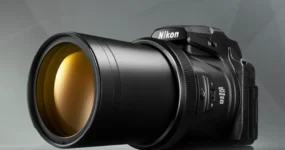


[…] to a survey of professional photographers compiled by Daily Camera News, 73% of professionals now shoot primarily on mirrorless systems. That adoption rate reflects the […]