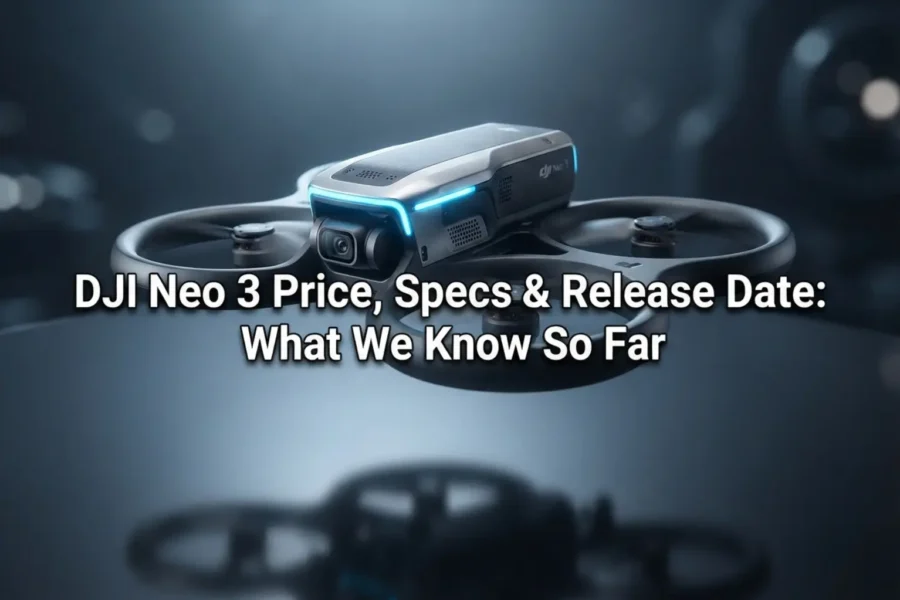
When DJI launched the original Neo series, it disrupted the aerial creator market by offering an ultra-lightweight, palm-takeoff drone that required no traditional remote controller or complex FAA registration. By combining automated AI subject tracking, built-in propeller guards, and an ultra-compact footprint, it became an instant favorite for travel vloggers, casual content creators, and solo social media producers.
Now, as competitive pressure mounts from rivals and mobile camera technology advances rapidly, industry rumors and supply chain leaks point to the upcoming DJI Neo 3. Expected to introduce higher frame rates, enhanced wind resistance, longer flight times, and deeper integration with FPV goggles and motion controllers, the Neo 3 aims to cement DJI’s dominance in the ultra-portable drone segment.
Best FPV Drones in 2026 (Buyer’s Guide for Beginners & Content Creators)
Daisy’s Take: The palm-sized drone category is easily one of the most exciting segments in aerial video today! What made the original Neo so special was its friction-free operation—you could launch it straight off your palm, record a quick orbiting shot for Instagram or TikTok, and land it back on your hand without ever touching a phone app or remote joystick. If DJI brings 4K 60p and obstacle avoidance sensors to the Neo 3, it will be an irresistible upgrade for content creators on the move!
DJI Neo 3: Expected Specifications at a Glance
| Specification / Feature | DJI Neo (Current Generation) | DJI Neo 3 (Rumored / Expected) |
|---|---|---|
| Takeoff Weight | 135g (Sub-250g Category) | Under 150g (Ultra-Portable) |
| Camera Sensor | 1/2-inch CMOS Sensor | Upgraded 1/1.3-inch CMOS Sensor |
| Video Resolution & Frame Rates | 4K at 30fps / 1080p at 60fps | 4K at 60fps / 1080p at 120fps (Slow-Mo) |
| Image Stabilization | 1-Axis Mechanical Gimbal + RockSteady | 2-Axis Mechanical Gimbal + RockSteady 3.0 |
| Max Flight Time | ~18 Minutes | ~22 to 25 Minutes |
| Internal Storage | 22GB Built-in Storage | 32GB / 64GB + MicroSD Card Expansion Slot |
| Wind Resistance | Level 4 (Up to 8 m/s) | Level 5 (Up to 10.7 m/s) |
| Sensors & Tracking | Downward Infrared & Vision Positioning | Downward + Forward Binocular Vision Sensors |
| FPV Ecosystem Support | DJI Goggles 3 / RC Motion 3 | DJI Goggles 3 / N3 / RC Motion 3 Integration |
| Estimated Price (Base Drone) | $199 (Launch) | ~$229 – $249 |
Key Upgrades to Expect in the DJI Neo 3
1. Upgraded 1/1.3-Inch CMOS Sensor with 4K 60p
While the first-generation model delivered respectable 4K 30p video clips, creators frequently requested higher frame rates for smoother action tracking and dynamic movement. Leaks indicate that the DJI Neo 3 may adopt an upgraded 1/1.3-inch CMOS image sensor similar to the sensor architecture found in the Mini and Osmo lines.
This sensor upgrade would bring true 4K at 60fps recording, 10-bit D-Log M color profile options for expanded dynamic range during post-production color grading, and improved low-light performance when flying in shadowy urban environments or during sunset sessions.
2. Enhanced 2-Axis Mechanical Gimbal & Stabilization
The original Neo relied on a single-axis tilt mechanical gimbal combined with electronic image stabilization (RockSteady / HorizonBalancing). To combat camera jitter during gusty winds, rumors suggest the Neo 3 will incorporate a light 2-axis mechanical gimbal (tilt and roll control). When paired with RockSteady 3.0 algorithms, this ensures buttery-smooth aerial footage even during rapid directional shifts.
3. Improved Flight Time & Wind Resistance
Because palm-sized drones carry smaller battery cells, battery endurance is always a primary design challenge. The Neo 3 is rumored to feature higher-density battery technology, boosting continuous flight times from 18 minutes up to approximately 22 to 25 minutes per charge.
Furthermore, upgraded brushless motors are expected to boost wind resistance from Level 4 up to Level 5 (capable of handling gusts up to 10.7 m/s)—giving creators greater confidence when flying near coastal shorelines, open mountain trails, or breezy city plazas.
4. Forward Vision Sensors & Smarter AI Subject Tracking
While automated AI follow-me tracking is the core selling point of the series, earlier models lacked forward-facing obstacle avoidance sensors. Leaked chassis concepts suggest the Neo 3 may add forward-facing binocular vision sensors to complement its downward positioning system. This addition will allow the drone to automatically brake or route around branches, light poles, and walls while autonomously tracking a runner or cyclist.
To discover more about aerial options and compare lightweight drones across the market, browse through our comprehensive Drone News & Guide Tag.
Daisy’s Pro Tip: If you enjoy immersive freestyle flying, keep an eye out for FPV compatibility! The Neo series is uniquely versatile because it can double as an indoor cinema-whoop when paired with FPV goggles. If you want to explore dedicated acrobatic and cinema drones, check out our curated Best FPV Drones Guide!
Expected Release Date & Pricing Predictions
Release Date Expectations
DJI maintains a rapid product release cycle across its consumer and enterprise lines. Given recent regulatory timeline filings and typical supply chain production schedules, industry analysts expect the official announcement for the DJI Neo 3 to arrive in late Q1 or early Q2.
Estimated Launch Price
One of the primary drivers behind the original Neo’s massive commercial success was its disruptive price point. To remain accessible to casual vloggers while covering the cost of upgraded camera sensors and vision hardware, industry estimates place the expected price structure as follows:
- DJI Neo 3 (Stand-Alone Drone): Estimated at $229 – $249 (Includes drone, 1x battery, propeller guards, and basic cable set).
- DJI Neo 3 Fly More Combo: Estimated at $349 – $379 (Includes drone, RC-N3 remote controller, 3x batteries, two-way charging hub, spare props, and shoulder bag).
- DJI Neo 3 Motion FPV Combo: Estimated at $549 – $599 (Includes drone, DJI Goggles, RC Motion controller, and extra batteries).
Check Current DJI Drone Deals & Bundles
For more breaking news, product launches, and updates across DJI’s aerial ecosystem, explore our dedicated DJI News Category and stay tuned to our focused DJI Neo News Hub.
Frequently Asked Questions (FAQ)
Frequently Asked Questions
Q: When will the DJI Neo 3 be officially announced?
A: While DJI has not confirmed an exact launch event yet, industry reports and supply chain indicators point toward an official unveiling in late Q1 or early Q2.
Q: Will the DJI Neo 3 support 4K 60fps video recording?
A: Yes! The transition to 4K 60p video is expected to be one of the headline upgrades, powered by an updated 1/1.3-inch sensor architecture.
Q: Do you need a remote controller to fly the DJI Neo 3?
A: No. Like its predecessor, the Neo 3 is designed for controller-free palm takeoffs and automated AI modes, though it can also be paired with mobile phones, standard RC controllers, or FPV goggles for manual control.
Final Verdict & Summary
The DJI Neo 3 promises to refine an already revolutionary palm-sized drone platform. By combining 4K 60p video recording, enhanced 2-axis stabilization, forward vision sensors, and extended battery life into a lightweight frame under 150 grams, DJI is set to deliver another winner for content creators.
Stay tuned to Daily Camera News as we track official FCC filings, leaked hands-on photos, and official pricing announcements as soon as they drop!