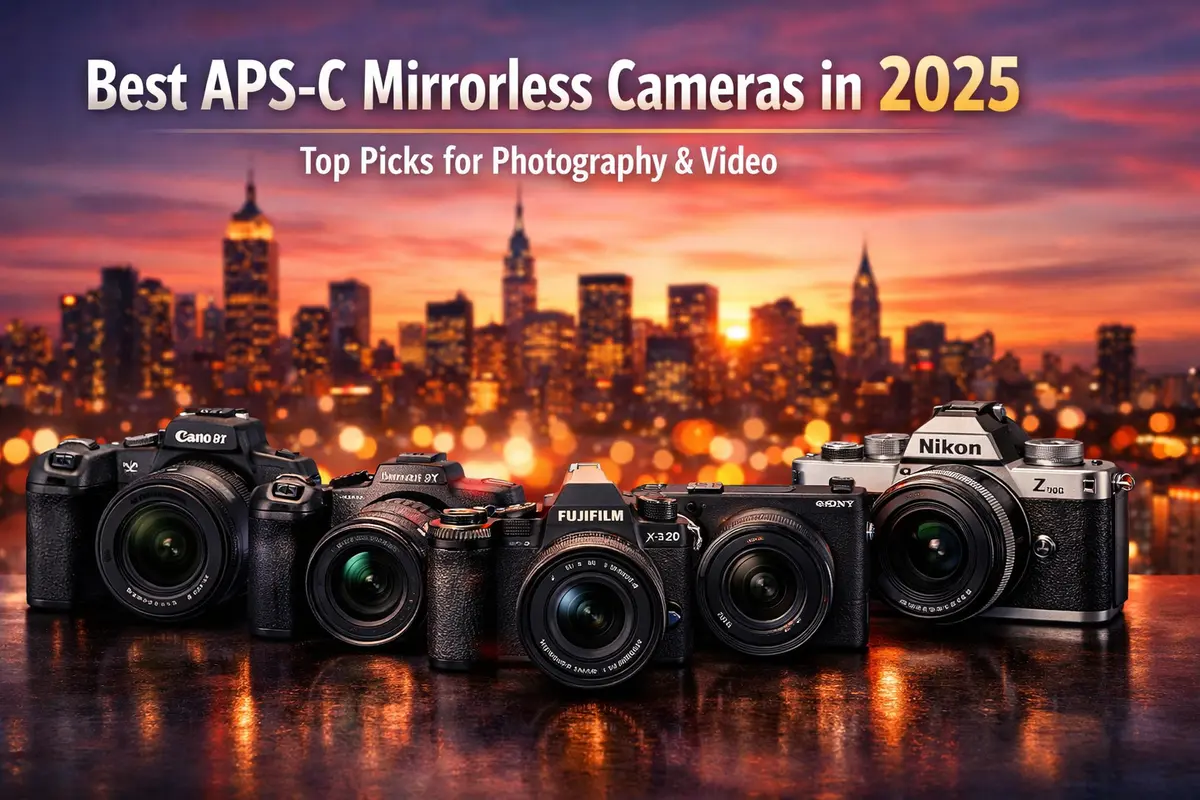
APS-C mirrorless cameras continue to be one of the smartest choices in 2025 — offering an excellent balance between image quality, size, performance and price. For many photographers and hybrid creators, modern APS-C systems now deliver autofocus speed, video features and lens options that were once reserved for full-frame models.
In this guide, we break down the best APS-C mirrorless cameras of 2025, covering top picks from Canon, Nikon, Sony and Fujifilm. Whether you’re upgrading from an entry-level camera, switching systems, or looking for a lightweight setup for travel, wildlife or video work, this list focuses on real-world usability — not just specs on paper.
Unlike generic “best camera” lists, this article focuses specifically on the APS-C mirrorless segment. That means better value for money, compact designs, and camera systems that are easier to build around over time. If you’re still deciding between sensor formats, our Ultimate Mirrorless Camera Guide explains how APS-C compares to full-frame in detail.
We’ve also considered long-term ecosystem support — including lens availability and future system growth. For brand-specific recommendations, you can explore our dedicated guides for Canon and Nikon mirrorless cameras, along with system overviews for Sony and Fujifilm.
Below, you’ll find our carefully selected list of the best APS-C mirrorless cameras in 2025, each matched with a clear “best for” use case — from beginners and content creators to advanced photographers who want speed, reach and portability.
How We Picked the Best APS-C Mirrorless Cameras in 2025
Choosing the best APS-C mirrorless cameras in 2025 isn’t just about sensor size or headline specs. Our selections are based on how these cameras perform in real-world shooting — from photography and video to long-term system usability.
At Daily Camera News, we evaluate APS-C cameras using a combination of hands-on experience, manufacturer updates, and ecosystem maturity. The goal is to highlight cameras that make sense not only today, but also as part of a system you can grow into.
- Autofocus performance: Subject detection, tracking reliability and real-world speed for photo and video.
- Image quality: APS-C sensor performance, modern sensor designs, dynamic range and low-light usability.
- Video features: 4K capabilities, crop behavior, overheating control and creator-friendly tools.
- Lens ecosystem: Native lens availability, third-party support and long-term system growth.
- Build & usability: Ergonomics, weather sealing and control layout.
- Value for money: What you actually get for the price in 2025.modern sensor designs
To ensure fair comparisons, we focus on currently available APS-C mirrorless models with active manufacturer support. Entry-level cameras, advanced enthusiast models and hybrid creator bodies are all included — but only when they offer clear advantages within their category.
If you’re evaluating specific systems, our detailed system guides for Canon EOS R, Nikon Z, Sony E-mount and Fujifilm X explain how each ecosystem supports APS-C users.
Best APS-C Mirrorless Cameras 2025 — Quick Comparison
If you want a fast overview before diving into individual reviews, this comparison table highlights the key differences between the best APS-C mirrorless cameras in 2025.
| Camera | Sensor | Autofocus | Video | IBIS | Lens Ecosystem | Best For | Buy |
|---|---|---|---|---|---|---|---|
| Canon EOS R7 | APS-C, 32.5MP | Dual Pixel CMOS AF II | 4K60p | Yes | Canon RF / RF-S | Wildlife & Action | Amazon |
| Sony a6700 | APS-C, 26MP | AI-based Real-time AF | 4K120p | Yes | Sony E (strong 3rd-party) | Hybrid Photo & Video | Amazon |
| Fujifilm X-S20 | APS-C, 26MP | Subject Detect AF | 6.2K | Yes | Fujifilm X | Creators & Video | Amazon |
| Sony ZV-E10 II | APS-C, 26MP | Real-time Eye AF | 4K60p | No | Sony E | Vlogging & YouTube | Amazon |
| Fujifilm X-E5 | APS-C, 40MP | Phase Detect AF | 4K | No | Fujifilm X | Photo Enthusiasts | Amazon |
| Nikon Z50 II | APS-C, 20.9MP | Hybrid AF | 4K | No | Nikon Z DX | Best Affordable | Amazon |
| Canon EOS R50 V | APS-C, 24MP | Dual Pixel AF | 4K60p | No | Canon RF / RF-S | Budget Vlogging | Amazon |
| Nikon Z fc | APS-C, 20.9MP | Hybrid AF | 4K | No | Nikon Z DX | Style & Travel | Amazon |
Canon EOS R7
Why the Canon EOS R7 Stands Out
The Canon EOS R7 remains one of the strongest APS-C mirrorless cameras in 2025, especially for photographers who prioritize speed and subject tracking. With a high-resolution APS-C sensor and Canon’s advanced Dual Pixel CMOS AF II system, the R7 delivers performance that rivals many older full-frame models.
Autofocus and Real-World Performance
Canon’s Dual Pixel CMOS AF II provides fast and accurate subject detection for people, animals and birds. Tracking performance is particularly impressive for wildlife and sports photography, where the APS-C crop factor offers additional reach without the cost or weight of full-frame telephoto lenses.
Video Capabilities
For video shooters, the EOS R7 supports 4K up to 60p and benefits from in-body image stabilization, making handheld shooting far more practical. Canon’s color science and reliable autofocus transitions also make it a solid choice for hybrid creators.
Who Should Buy the Canon EOS R7?
- Wildlife and bird photographers looking for extra reach
- Sports and action shooters who need fast autofocus
- Advanced enthusiasts building a long-term Canon RF system
Sony a6700
Why the Sony a6700 Stands Out
The Sony a6700 is designed for creators who need a true hybrid camera. It combines Sony’s latest AI-powered autofocus system with robust video capabilities, making it one of the most versatile APS-C mirrorless cameras available in 2025.
Autofocus and Performance
Sony’s Real-time AI Autofocus excels at tracking eyes, faces, animals and moving subjects with impressive consistency. This reliability is a major advantage for photographers and filmmakers working in unpredictable shooting conditions.
Video Capabilities
With support for advanced video modes, high-quality codecs and effective image stabilization, the a6700 is well suited for everything from vlogging to professional video projects. The wide range of Sony E-mount lenses — including excellent third-party options — further strengthens its appeal.
Who Should Buy the Sony a6700?
- Hybrid creators shooting both photos and video
- YouTubers and filmmakers who rely on autofocus
- Users investing in the Sony E-mount ecosystem
Fujifilm X-S20
Why the Fujifilm X-S20 Stands Out
The Fujifilm X-S20 is one of the most attractive APS-C mirrorless cameras for creators in 2025. It combines Fujifilm’s well-known color science with a compact body, in-body image stabilization, and advanced video features that appeal to solo shooters and hybrid users alike.
Autofocus and Everyday Performance
Fujifilm’s subject-detection autofocus handles people, animals, and vehicles reliably for most real-world scenarios. While it may not match the absolute tracking consistency of Sony’s latest systems, it performs confidently for vlogging, interviews, and everyday photography.
Video Capabilities
Video is where the X-S20 truly shines. With high-resolution video recording options, strong stabilization, and long battery life compared to earlier Fujifilm models, it’s well suited for YouTube, short films, and travel video work. Fujifilm’s film simulations also reduce the need for heavy color grading.
Who Should Buy the Fujifilm X-S20?
- Content creators focused on video and hybrid shooting
- Solo shooters who benefit from in-body image stabilization
- Creators who value color science straight out of camera
Sony ZV-E10 II
Why the Sony ZV-E10 II Stands Out
The Sony ZV-E10 II is built with one clear goal in mind: making video creation as easy and reliable as possible. As an APS-C mirrorless camera focused on creators, it prioritizes fast autofocus, clean video output, and a lightweight design that works well for handheld shooting.
Autofocus and Creator-Friendly Features
Sony’s Real-time Eye AF remains one of the strongest autofocus systems available for vlogging and YouTube work. Face tracking is smooth and dependable, helping creators stay in focus even while moving. Dedicated video controls and a simplified interface further enhance usability.
Video Capabilities
The ZV-E10 II delivers sharp 4K video with strong subject tracking and good low-light performance for its class. While it lacks in-body image stabilization, pairing the camera with stabilized lenses or a gimbal easily solves this limitation for most creators.
Who Should Buy the Sony ZV-E10 II?
- Vloggers and YouTubers focused primarily on video
- Creators who want reliable autofocus without complex settings
- Users entering the Sony E-mount ecosystem for video work
Fujifilm X-E5
Why the Fujifilm X-E5 Stands Out
The Fujifilm X-E5 is designed for photographers who value portability, simplicity, and shooting experience. With its rangefinder-style body and tactile controls, it appeals strongly to street, travel, and documentary photographers who want a discreet yet capable APS-C mirrorless camera.
Image Quality and Color Science
Thanks to Fujifilm’s latest APS-C sensor and processor, the X-E5 delivers excellent image quality with rich dynamic range and pleasing colors. Fujifilm’s film simulations remain a major advantage, offering distinctive looks straight out of camera without the need for heavy post-processing.
Autofocus and Handling
Autofocus performance is reliable for everyday photography, including face and eye detection for people. While it is not designed for fast action or sports, it performs well for its intended use cases such as street scenes, portraits, and travel moments.
Who Should Buy the Fujifilm X-E5?
- Street and travel photographers seeking a compact system
- Photographers who enjoy manual dials and classic camera design
- Users invested in the Fujifilm X-mount lens ecosystem
Nikon Z50 II
Why the Nikon Z50 II Stands Out
The Nikon Z50 II represents one of the best entry points into Nikon’s Z-mount system for APS-C users. It combines solid image quality, dependable autofocus, and a comfortable DSLR-style grip at a more accessible price point than Nikon’s higher-end models.
Autofocus and Shooting Experience
With improved subject detection and face/eye AF, the Z50 II performs well for portraits, family photography, and casual action. It may not match Nikon’s full-frame Z cameras in tracking sophistication, but it delivers reliable results for most enthusiasts.
Video and Hybrid Use
While primarily aimed at photographers, the Z50 II also offers capable video features for casual content creation. It works well for basic vlogging, travel clips, and hybrid shooting, especially when paired with Nikon’s growing DX lens lineup.
Who Should Buy the Nikon Z50 II?
- Beginners and enthusiasts entering the Nikon Z ecosystem
- Photographers looking for an affordable APS-C mirrorless body
- Users interested in Nikon DX lenses and compact zooms
Canon EOS R50 V
Why the Canon EOS R50 V Stands Out
The Canon EOS R50 V is aimed at users who prioritize video content but still want the flexibility of interchangeable lenses. It builds on Canon’s strong Dual Pixel CMOS AF system while keeping the body small, lightweight, and easy to use for beginners.
Autofocus and Ease of Use
Canon’s Dual Pixel autofocus delivers smooth and reliable subject tracking, especially for faces and eyes. This makes the R50 V particularly well suited for vloggers, streamers, and creators who often work alone in front of the camera.
Video Performance
The R50 V offers clean, detailed 4K video and a simplified video-oriented interface. While it lacks advanced pro-level video tools, it provides an excellent balance of quality and ease of use for creators starting their mirrorless journey.
Who Should Buy the Canon EOS R50 V?
- Beginner video creators and vloggers
- Users who value reliable face and eye autofocus
- Creators entering the Canon RF ecosystem
Nikon Z fc
Why the Nikon Z fc Stands Out
The Nikon Z fc stands apart from most APS-C mirrorless cameras thanks to its retro-inspired design. Modeled after Nikon’s classic film cameras, it appeals to photographers who want a camera that looks as good as it performs.
Image Quality and Handling
Despite its vintage appearance, the Z fc delivers modern image quality with solid dynamic range and pleasing colors. Physical dials for shutter speed and exposure compensation provide a tactile shooting experience that many photographers appreciate.
Autofocus and Everyday Use
Autofocus performance is reliable for general photography, portraits, and casual action. While not intended for demanding sports or wildlife work, it performs well for lifestyle, travel, and street photography.
Who Should Buy the Nikon Z fc?
- Photographers who value design and shooting experience
- Casual shooters and enthusiasts
- Nikon users looking for a stylish APS-C body
Related Mirrorless Camera Guides
- Ultimate Mirrorless Camera Guide — How Mirrorless Systems Work
- Canon EOS R System Guide — Cameras, Lenses & Roadmap
- Nikon Z System Guide — Full Frame & DX Explained
- Sony E-Mount System Guide — APS-C & Full Frame Options
- Fujifilm X System Guide — APS-C Focused Mirrorless Lineup
- Nikon DX Mirrorless Lenses — Complete APS-C Lens Guide
Daisy’s Perspective on APS-C Mirrorless Cameras
APS-C mirrorless cameras remain the sweet spot for most photographers and creators. They offer a strong balance of image quality, portability, and price — without the size and cost of full-frame systems.
If you’re curious about where mirrorless systems are heading next, don’t miss my future-focused analysis on upcoming camera technologies.
Final Thoughts: Choosing the Best APS-C Mirrorless Camera in 2025
The best APS-C mirrorless camera in 2025 depends less on specifications and more on how you plan to use your camera. Whether you prioritize fast autofocus, video performance, portability, or system flexibility, today’s APS-C mirrorless lineup offers excellent choices across every major brand.
Sony and Canon continue to lead in autofocus and video usability, while Fujifilm offers one of the most refined APS-C ecosystems focused entirely on crop-sensor performance. Nikon, on the other hand, provides strong value options for photographers entering the Z-mount system at a more affordable price point.
Instead of chasing the most advanced specs, focus on choosing a camera that fits your shooting style and long-term system goals. Lens availability, ergonomics, and overall ecosystem maturity often matter more than small differences in sensor performance.