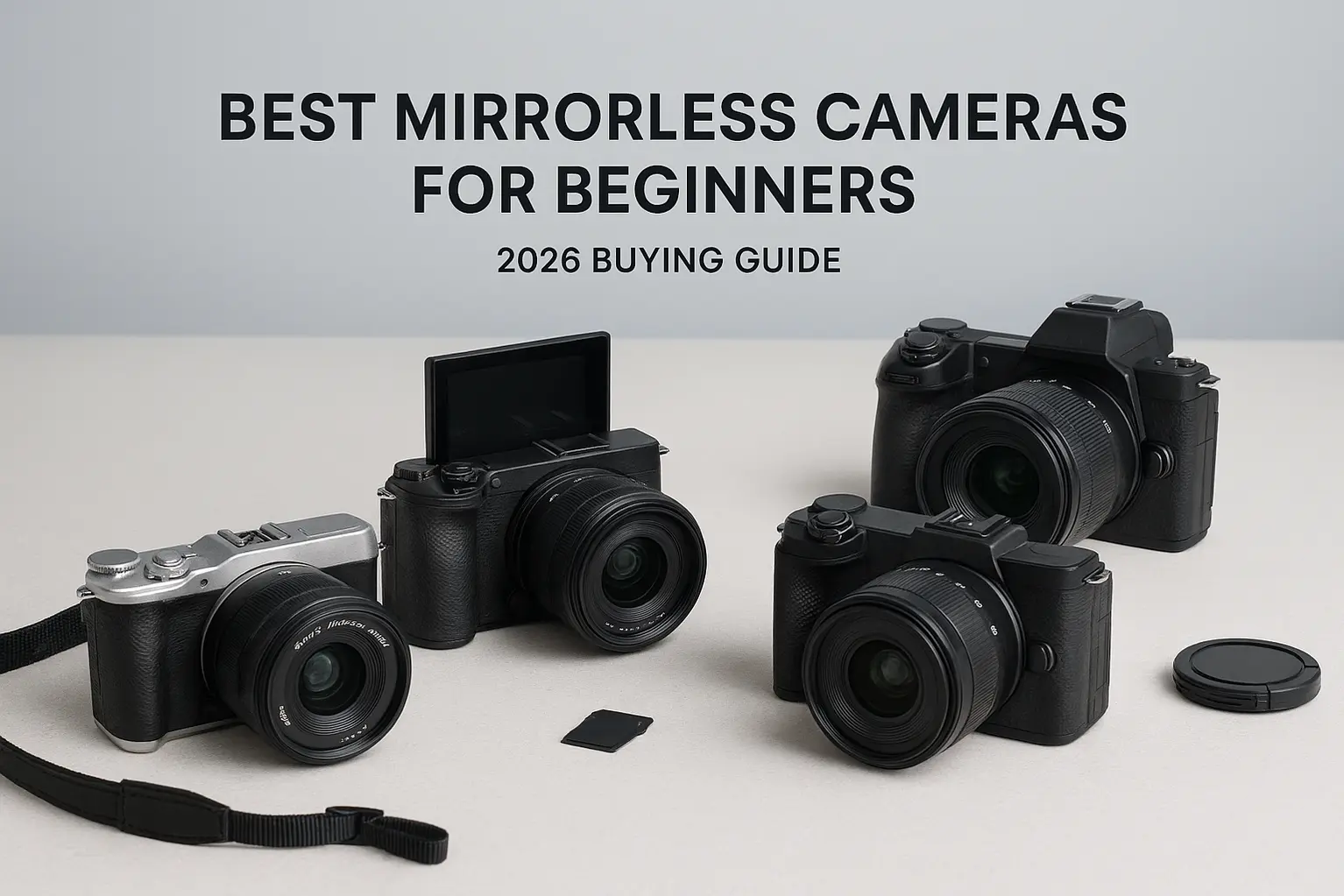
Choosing your first mirrorless camera can feel overwhelming — especially in 2026, when there are more beginner-friendly mirrorless cameras than ever before. From APS-C to full-frame options, modern mirrorless systems now offer excellent image quality, fast autofocus, and simple controls designed specifically for newcomers.
In this guide, we’ve carefully selected the best mirrorless cameras for beginners in 2026, focusing on models that are easy to use, reliable, and future-proof. Whether you’re upgrading from a smartphone, starting photography as a hobby, or looking for your first camera for video and vlogging, these entry-level mirrorless cameras strike the right balance between performance and simplicity.
We compare beginner mirrorless cameras based on autofocus performance, image quality, kit lens options, video capabilities, and overall value — so you can confidently choose the right camera without overpaying or outgrowing it too quickly.
What Makes a Mirrorless Camera Beginner-Friendly?
Not every mirrorless camera is ideal for beginners. The best entry-level mirrorless cameras in 2026 share a few key traits that make learning photography easier, faster, and more enjoyable.
Simple Controls & Intuitive Menus
Beginner-friendly mirrorless cameras prioritize clean button layouts, guided menus, and clear on-screen explanations. This helps new users focus on shooting instead of navigating complex settings.
Reliable Autofocus for Photos & Video
Modern mirrorless systems offer advanced autofocus, but beginners benefit most from cameras with dependable face and eye detection. Accurate AF reduces missed shots and builds confidence early on.
Lightweight Bodies with Comfortable Handling
A compact, lightweight mirrorless camera is easier to carry, travel with, and use for longer periods. Ergonomics matter — especially for beginners upgrading from smartphones.
Strong Kit Lens Options
The best mirrorless cameras for beginners come bundled with versatile kit lenses. These lenses cover everyday shooting scenarios without requiring immediate additional purchases.
Room to Grow Within the System
A beginner camera should not be a dead end. Choosing a mirrorless system with a wide lens ecosystem ensures you can upgrade lenses and accessories as your skills improve.
Best Mirrorless Cameras for Beginners (2026) — Quick Comparison
This quick comparison highlights the best beginner-friendly mirrorless cameras in 2026, focusing on ease of use, autofocus reliability, system longevity, and overall value.
| Camera | Sensor | Autofocus | Video | Best For |
|---|---|---|---|---|
| Canon EOS R50 | APS-C | Dual Pixel AF II | 4K 30p | Absolute beginners & everyday photography |
| Sony ZV-E10 | APS-C | Real-time Eye AF | 4K 30p | Vlogging & hybrid creators |
| Nikon Z50 II | APS-C | Hybrid AF with Eye Detection | 4K 30p | Photography-focused beginners |
| Fujifilm X-S20 | APS-C | AI Subject Detection | 6.2K / 4K 60p | Creative shooters & video learners |
| Canon EOS R8 | Full Frame | Dual Pixel AF II | 4K 60p | Beginners stepping into full-frame |
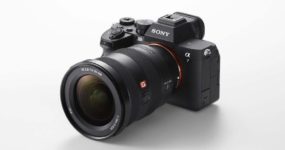
| Sony A7 IV | Full Frame | Advanced AI AF | 4K 60p | Long-term system investment |
💡 Tip: If you’re unsure which sensor size to choose, APS-C models offer the best balance of price, size, and performance for most beginners.
APS-C vs Full-Frame for Beginners
For most beginners, APS-C mirrorless cameras offer the best starting point. They are more affordable, lighter to carry, and supported by a wide range of beginner-friendly lenses.
Full-frame cameras deliver better low-light performance and depth control, but they come with higher costs and larger lenses. Unless you already know you need full-frame, APS-C is usually the smarter first step.
💡 Tip: Many professional photographers started with APS-C and upgraded later — your first camera should help you learn, not overwhelm you.
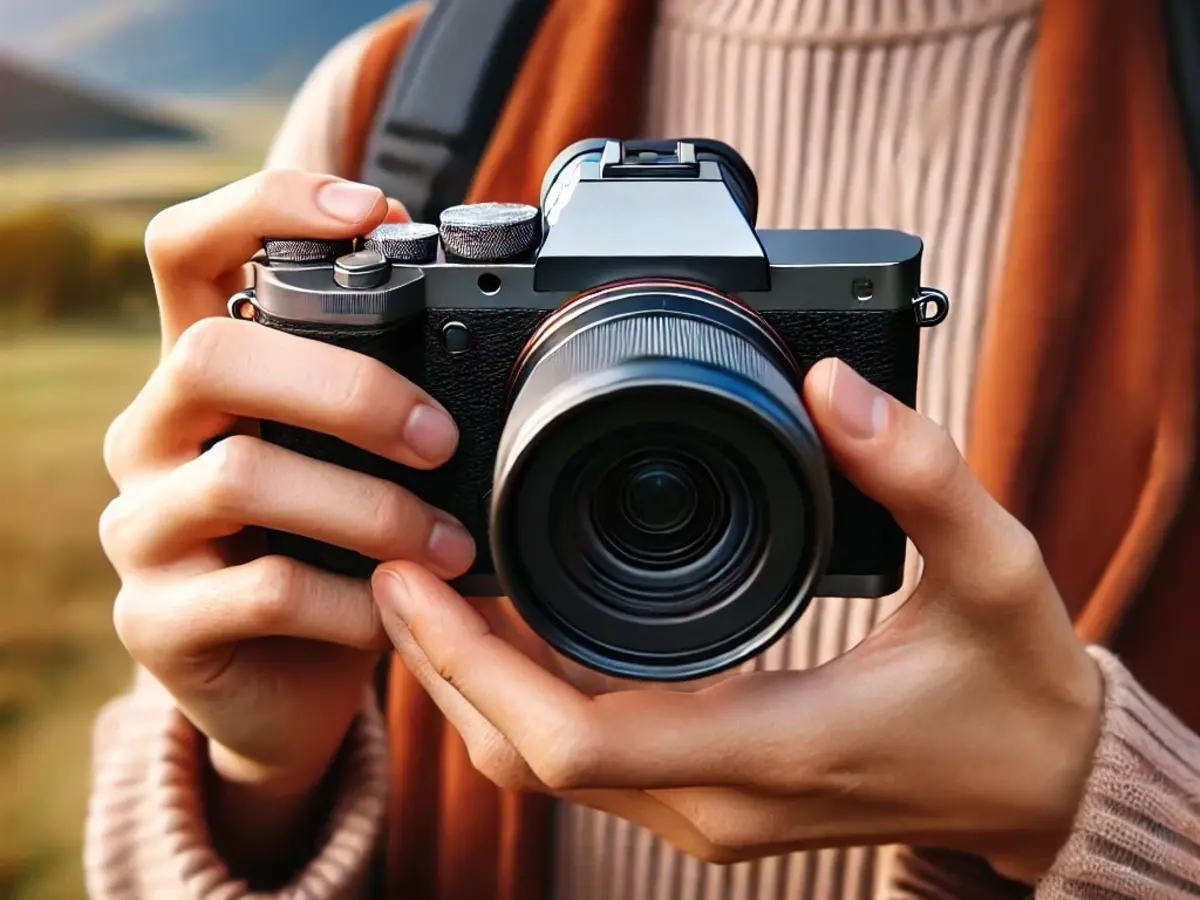
Top Picks: Best Mirrorless Cameras for Beginners
1. Canon EOS R50 – Best for Absolute Beginners
The Canon EOS R50 is one of the easiest mirrorless cameras to recommend to first-time users. Its compact body, intuitive menus, and excellent autofocus system make learning photography feel natural rather than technical.
Canon’s Dual Pixel AF II delivers fast and reliable eye detection for people and animals, while the 24.2MP APS-C sensor provides excellent image quality for everyday photography, travel, and family moments.
With solid 4K video, pleasing colors straight out of camera, and access to the growing RF lens ecosystem, the EOS R50 is a safe and future-proof entry into mirrorless photography.
Check Price & Reviews on Amazon →
View Deals on B&H Photo →
💡 Tip: Starter kits often include the RF-S 18–45mm lens — a great all-around option for beginners.
2. Sony ZV-E10 – Best for Vlogging & Content Creators
The Sony ZV-E10 is one of the most popular mirrorless cameras among vloggers and content creators — and for good reason. It combines Sony’s industry-leading autofocus with a compact, lightweight body designed specifically for video-first users.
Thanks to real-time Eye AF for humans and animals, subject tracking remains accurate even while moving. The camera delivers sharp 4K video, excellent skin tones, and strong low-light performance for its class, making it ideal for YouTube, TikTok, and hybrid photo-video creators.
With access to Sony’s massive E-mount lens ecosystem, the ZV-E10 offers long-term upgrade potential — from ultra-wide vlogging lenses to fast primes for cinematic shots.
Check Price & Reviews on Amazon → View Deals on B&H Photo →
💡 Tip: Pair the ZV-E10 with a wide-angle lens (like a 10–20mm) for handheld vlogging and smoother framing.
3. Nikon Z50 II – Best for Photography-Focused Beginners
The Nikon Z50 II is a strong choice for beginners who prioritize photography over video and want a camera that feels solid, reliable, and familiar in use. Its ergonomic design and logical button layout make it especially appealing to users coming from smartphones or older DSLRs.
The APS-C sensor delivers excellent image quality with natural colors and strong dynamic range, while Nikon’s hybrid autofocus with eye detection performs well for portraits, everyday shooting, and casual wildlife photography.
Paired with Nikon’s growing Z-mount DX lens lineup — and full compatibility with full-frame Z lenses — the Z50 II offers a smooth upgrade path for photographers who plan to grow into the Nikon ecosystem.
Check Price & Reviews on Amazon → View Deals on B&H Photo →
💡 Tip: The Z50 II works great with compact DX zoom lenses, making it ideal for travel and everyday carry.
4. Fujifilm X-S20 – Best for Creative Shooters & Hybrid Use
The Fujifilm X-S20 is one of the most well-rounded beginner-to-intermediate mirrorless cameras on the market, especially for users who care about color science, creative control, and hybrid shooting.
Its 26.1MP APS-C X-Trans CMOS sensor delivers Fujifilm’s famous film simulations, producing beautiful JPEGs straight out of camera — a big advantage for photographers who don’t want to spend hours editing.
On the video side, the X-S20 punches above its class with 6.2K recording, advanced autofocus with subject detection, and excellent in-body stabilization. This makes it an outstanding choice for creators who want one camera for both photography and video.
The deep grip and PASM-style mode dial make it especially beginner-friendly compared to older Fujifilm models, while still offering plenty of room to grow.
Check Price & Reviews on Amazon → View Deals on B&H Photo →
💡 Tip: Use Fujifilm Film Simulations like Classic Chrome and Reala Ace to get stunning colors without post-processing.
5. Panasonic Lumix G100 II – Best Compact Camera for Travel & Everyday Video
The Panasonic Lumix G100 II is designed for beginners who prioritize portability, simplicity, and video usability without stepping into bulky camera territory.
Built around a 20.3MP Micro Four Thirds sensor, the G100 II delivers solid image quality while keeping the body extremely compact. This makes it ideal for travelers, daily carry users, and creators who want a camera that feels closer to a premium compact — but with interchangeable lenses.
Video is where Panasonic shines. The G100 II offers reliable autofocus improvements, clean 4K recording, and Panasonic’s excellent audio integration when paired with compatible microphones. For beginners entering YouTube or social video, it’s a very approachable starting point.
While it’s not aimed at fast sports or advanced low-light shooting, the G100 II excels as a simple, lightweight hybrid camera for everyday storytelling.
Where to Buy Panasonic Lumix G100 II
Check Price & Reviews on Amazon → View Deals on B&H Photo →
💡 Tip: Pair the G100 II with a compact Micro Four Thirds prime lens to keep your travel setup ultra-light.
6. OM System OM-5 – Best Weather-Sealed Camera for Outdoor Beginners
The OM System OM-5 is a unique option for beginners who plan to shoot in challenging outdoor conditions — hiking, travel, nature, street photography, and unpredictable weather.
Featuring a 20.4MP Micro Four Thirds sensor, in-body image stabilization, and class-leading weather sealing, the OM-5 stands out as one of the most durable beginner-friendly mirrorless cameras available in 2026.
This camera is ideal for users who value stability and reliability over sheer sensor size. The powerful IBIS system allows sharp handheld shots in low light, while the lightweight body makes it easy to carry all day.
For beginners who want to explore landscape, travel, or outdoor photography without worrying about rain or dust, the OM-5 is a long-term investment rather than a stepping stone.
Check Price & Reviews on Amazon → View Deals on B&H Photo →
💡 Tip: Weather-sealed lenses are key — pair the OM-5 with a sealed MFT zoom to unlock its full outdoor potential.
Quick Comparison Table (Beginner Focused)
| Camera | Best For | Video | Autofocus | Stabilization | Screen | Approx. Price |
|---|---|---|---|---|---|---|
| Canon EOS R50 | Beginner Photography | 4K 30p | Dual Pixel AF II | Digital IS | Fully Articulating | $999 |
| Sony ZV-E10 | Vlogging & Content | 4K 60p | AI Eye & Face AF | Electronic IS | Fully Articulating | $799 |
| Fujifilm X-S20 | Travel & Daily | 6.2K / 4K | AI AF | IBIS | Fully Articulating | $999 |
| Nikon Z50 II | Outdoor & Adventure | 4K 60p | Hybrid AF | Electronic IS | Tilting Screen | $899 |
| Sony A7C II | Hybrid All-Round | 4K 60p | AI Subject AF | IBIS | Fully Articulating | $1,798 |
Which Beginner Mirrorless Camera Should You Buy in 2026?
Choosing your first mirrorless camera depends on what you shoot most often. Use the table above to quickly compare key features, then check out the detailed picks below to match a camera to your style.
Best for Photography
The Canon EOS R50 is a standout for beginner photographers thanks to its excellent image quality and easy controls.
Check price on Amazon → View on B&H →
Best for Video / Vlogging
If you plan to shoot video or vlog, the Sony ZV-E10’s strong autofocus and flip screen make it one of the easiest cameras to start with.
Check price on Amazon → View on B&H →
Best for Travel
The Fujifilm X-S20 combines strong stills performance with great video and portability — ideal for travel creators.
Check price on Amazon → View on B&H →
Best for Outdoor / Adventure
The Nikon Z50 II strikes a balance between rugged design and versatile performance that suits outdoor and adventure shooters.
Check price on Amazon → View on B&H →
Check price on Amazon → View on B&H →
Final Thoughts: Choosing Your First Mirrorless Camera in 2026
Choosing one of the best mirrorless cameras for beginners in 2026 isn’t about buying the most expensive model — it’s about finding a camera system that helps you learn faster, shoot more confidently, and grow over time.
Whether your priority is photography, vlogging, travel, or everyday content creation, today’s beginner-friendly mirrorless cameras offer excellent image quality, fast autofocus, and compact designs that make the learning curve far less intimidating than ever before.
If you want simplicity and value, APS-C models like the Canon EOS R50, Sony ZV-E10, and Fujifilm X-S20 are hard to beat. If you’re already thinking long-term and want a system you won’t outgrow quickly, a compact full-frame option like the Sony A7C II can be a smart future-proof investment.
The key takeaway? Choose the system, not just the camera. Lens availability, future upgrades, and how the camera fits your shooting style matter just as much as specs on paper.



[…] 👉 See also: Best Mirrorless Cameras for Beginners […]