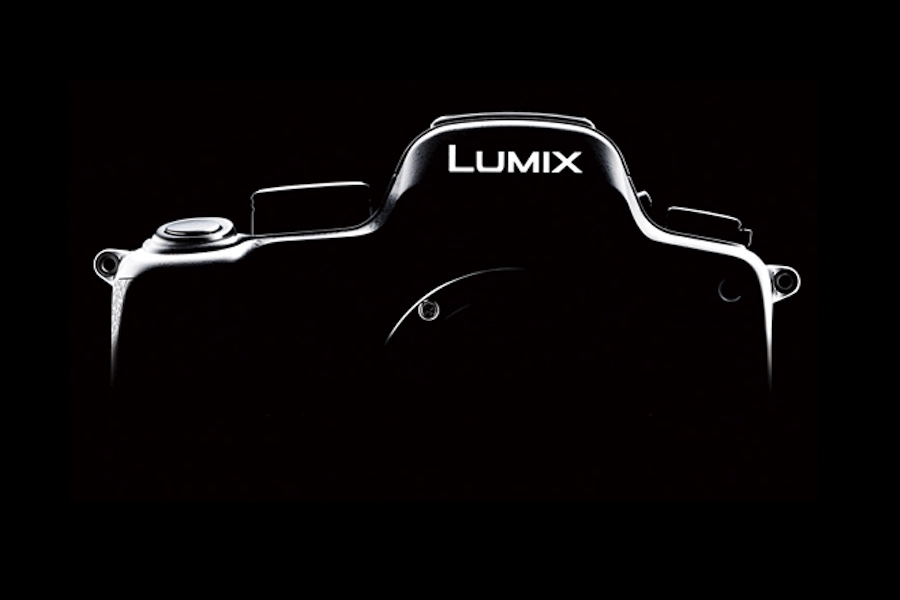
Good News! Looks like the Panasonic G9 will be the next high-end Micro Four Thirds camera. This mirrorless camera is rumored to be announced on November 6th, 2017.
The upcoming Panasonic G9 is said to be another variation of the video-centric Lumix GH5 camera. The new Panasonic G9 is rumored to feature 80MP shooting mode by stitching together multiple pictures. The processor will offer 60fps burst shooting.
The release date for this Panasonic G9 will be after the Christmas by the beginning of January.
Panasonic G9 to be announced on November 6th, 2017
Panasonic has been rumored to introduce a new mirrorless camera with a Micro Four Thirds sensor. It will be called the Panasonic G9.
The resolution of the sensor is unknown at the moment. If this would be a high-end product for wild life photographers, we might expect the proven 20-megapixel sensor for this one.
Rumored Panasonic G9 specifications
- 80MP shooting mode
- It can stitch together 6 pics and create 1 GB files
- 60 pic frame burst
- Large buffer with no slow down
- Shipping after Christmas
These are the first information for the upcoming Panasonic G9 camera. The official announcement is expect on November 6th, 2017. Stay tuned with us for more information.
Read more Panasonic Rumors.



I assume they’re doing something like Olympus’ Hires Mode here. On my 20 megapixel Pen-F, this mode takes eight shots with 1 and 1/2 pixel offsets. So you wind up with two 20 megapixel shots with R, G, and B samples for every pixel, that are interstitially overlapped. Interpolating this to the usual arrangement of pixels, you get an 80 megapixel image.
Now, of course, that’d doesn’t have an actual 80 megapixel’s worth of resolution. But since there’s no Bayer interpolation needed, the result is better than a conventional 40 megapixel shot would be. The camera reduces this internally to 50 megapixels if you shoot JPEG, or keeps the eight separate shots in a special raw file if your’e shooting raw.
The limitaiton of this is that you can’t have a moving subject, and the camera needs to be on a tripod.
It makes sense Panasonic would get to this, since they’ve adopted the same kind of In-Camera Image Stabilization that Olympus has been using for years, and that’s the basis for the multi-shot technology. Though it was actually Hasselblad that had this idea out first, delivering a 200 megapixel shot out of four 50 megapixel shots.