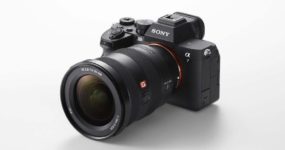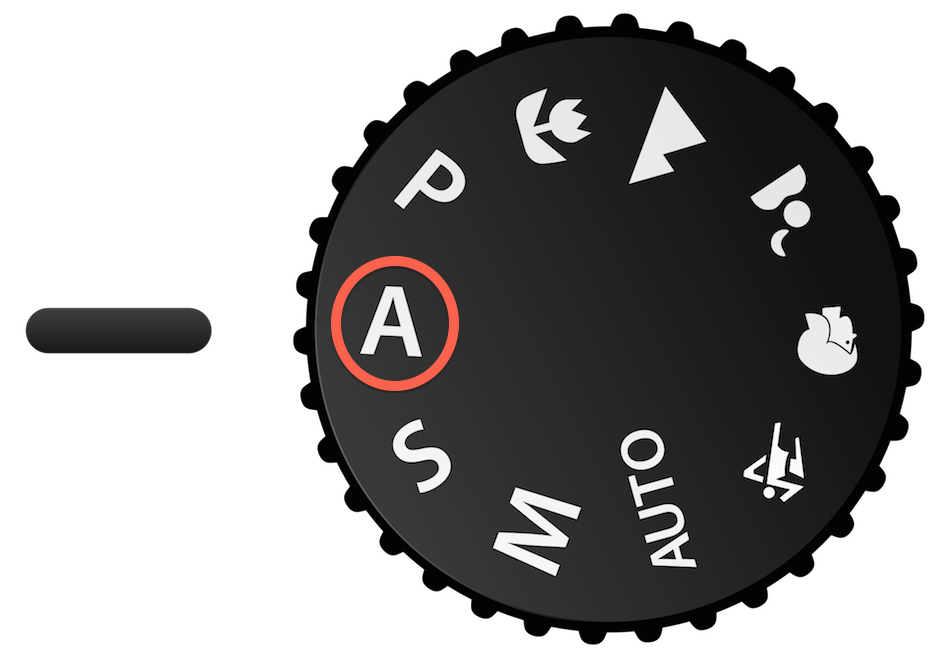
Aperture Priority Mode is a DSLR camera shooting mode that allows the user to choose a specific aperture, f-stop value. Aperture Priority Mode is represented by either an “A” or the letters “AV” on the mode dial on the top of your DSLR camera.
In Aperture Priority Mode you have control over the aperture value, and the camera will set the appropriate shutter speed for you to ensure correct exposure.
Aperture and Shutter Priority are semi-manual (or semi-automatic) modes that gives you some control over your settings but also ensure you have a well exposed image by the camera. The photographer choose the aperture value that you wish to shoot at and let the camera make a decision about which shutter speed to select to give a well exposed shot.
Aperture Priority Mode Explained, Selecting a F-Stop Value
In Aperture Priority Mode, you have control over the f-stop to control both the amount of light that comes through the lens and the depth of field.
When the camera is in the aperture priority mode, turning the command dial selects an aperture. As the command dial is being turned, an aperture value appears on the monitor and the corresponding shutter speed also appears so that you can determine if the aperture and shutter speed combination is an appropriate one.
Maximum and minimum apertures
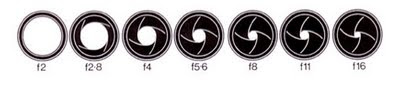
The specifications for a given lens typically include the maximum and minimum aperture sizes, for example, f/1.4–f/22. In this case f/1.4 is the maximum aperture (the widest opening), and f/22 is the minimum aperture (the smallest opening).
When would you use Aperture Priority Mode?
The main purpose of using aperture-priority mode is to control the depth of field. Aperture priority is useful in landscape photography and portrait photography.
For example, if you are shooting a landscape, than you will want a wide or large depth of field to keep everything in focus. This would require an aperture of around f16 / 22. But, if you are shooting a small object than you would want a narrow or small depth of field to blur out the background.
This would require an aperture between f1.8 and f4/5.6, depending on how small the object is. The larger the aperture, the shallower the depth of field. A shallow depth of field makes the main subjects standing out