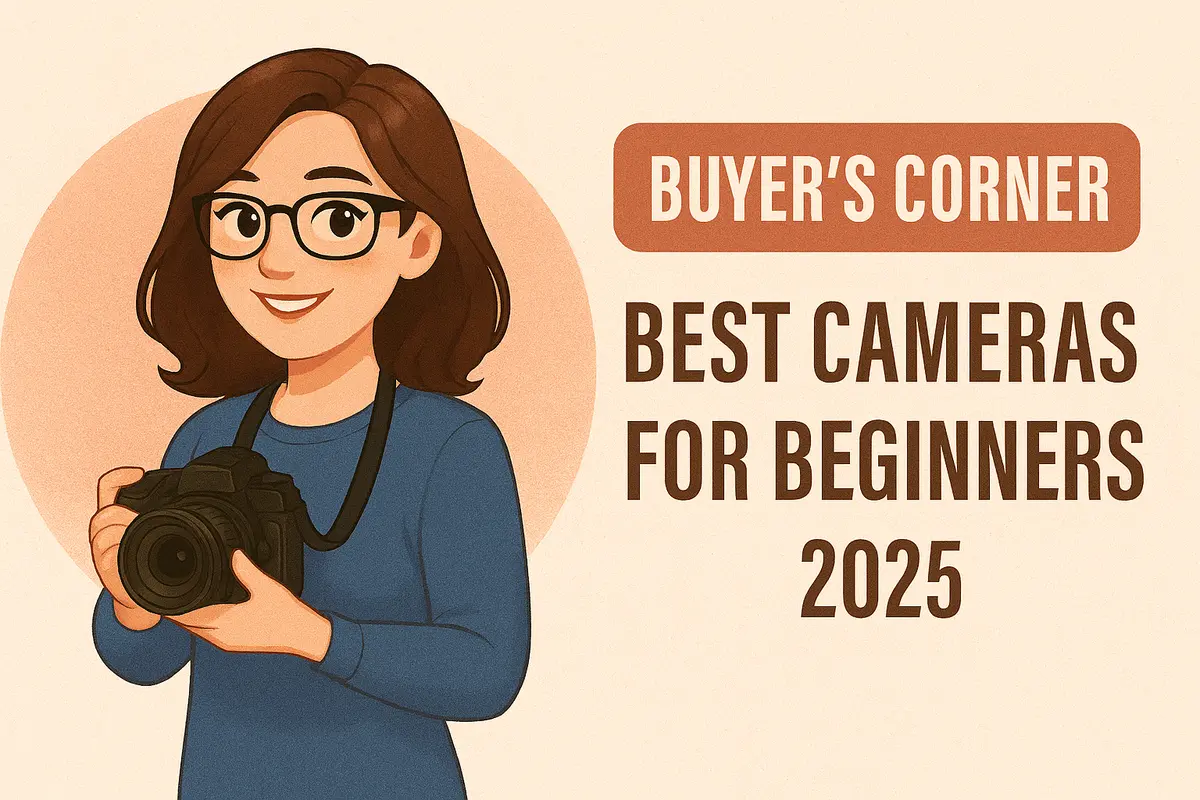
Hey there, friend! It’s Daisy, back again — and today I want to help you pick the perfect first camera. If you’re just starting out in photography, 2025 has some amazing beginner-friendly options that won’t overwhelm you or empty your wallet. In this Buyer’s Corner, I’ll walk you through my updated list of the best cameras for beginners — with simple explanations, practical tips, and direct links so you can shop smart and start shooting with confidence.
Ready to upgrade from your phone to a real camera? Whether you’re diving into photography for the first time or gifting a camera to a budding shutterbug, 2025 offers more beginner-friendly options than ever. I’ve rounded up the best entry-level cameras that balance ease of use, image quality, and value — plus direct links to trusted retailers so you can shop smart.
📸 What Makes a Camera Beginner-Friendly?
- Intuitive controls: Simple menus and auto modes that help you learn without overwhelm.
- Compact design: Lightweight bodies you’ll actually carry and use.
- Interchangeable lenses: Room to grow with affordable lens options.
- Reliable autofocus: Confident focusing for portraits, pets, and everyday life.
- Good value: Smart pricing with features that matter for beginners.
🏆 Daisy’s Top Picks for 2025
Canon EOS R50
Type: Mirrorless APS-C
Why it’s great: Compact, lightweight, and beginner-friendly with excellent autofocus and a flip screen. Canon’s ecosystem has plenty of affordable lenses, so you can grow naturally from kit lens to primes.
Perfect for: Travel, portraits, everyday shooting
Nikon Z30
Type: Mirrorless APS-C
Why it’s great: Designed for creators — excellent video features, articulating screen, and clean audio options. No viewfinder keeps the body small and affordable for entry-level buyers.
Perfect for: YouTubers, vloggers, casual shooters
Sony ZV-E10
Type: Mirrorless APS-C
Why it’s great: Class-leading autofocus, flip screen, and strong video tools make it a standout for hybrid creators. Access to Sony’s E-mount lenses gives you endless upgrade paths.
Perfect for: Hybrid shooters who want both photo and video
Fujifilm X-T30 II
Type: Mirrorless APS-C
Why it’s great: Gorgeous design, film simulations, and tactile controls that make learning exposure fun. The JPEG colors are beloved by beginners and enthusiasts alike.
Perfect for: Artistic shooters and those who love manual dials
Panasonic Lumix G100
Type: Micro Four Thirds
Why it’s great: Compact, video-focused, with excellent stabilization and portability. The Micro Four Thirds ecosystem has plenty of small, budget-friendly lenses.
Perfect for: Beginners who value portability and video features
Quick comparison table: Best beginner cameras 2025
| Camera | Sensor | Autofocus | Video | Best For |
|---|---|---|---|---|
| Canon EOS R50 | APS-C | Dual Pixel AF | 4K up to 30p | Travel, portraits |
| Nikon Z30 | APS-C | Hybrid AF | 4K up to 30p | Vlogging, casual |
| Sony ZV-E10 | APS-C | Real-time Eye AF | 4K up to 30p | Hybrid photo/video |
| Fujifilm X-T30 II | APS-C | Phase + Contrast AF | 4K up to 30p | Artistic, manual lovers |
| Panasonic Lumix G100 | Micro Four Thirds | DFD AF | 4K up to 30p | Video, portability |
🧠 Daisy’s Quick Tips for First-Time Buyers
- Don’t overspend: Entry-level kits deliver excellent results; invest in learning and practice.
- Kit lenses are fine: Start with the included lens, then add a prime (like 35mm or 50mm) later.
- Focus on ergonomics: Hold the camera in-store if you can; comfort matters more than spec sheets.
- Think ecosystem: Lenses and accessories shape your journey — choose a brand you can grow into.
FAQ: beginner camera buying
Should I buy DSLR or mirrorless?
Mirrorless cameras now dominate entry-level options with better autofocus, compact size, and strong video features. DSLRs are still capable, but mirrorless gives beginners a smoother start and a more future-proof system.
Is it okay to buy used?
Yes — used or refurbished gear from trusted retailers can be great value. Look for low shutter counts, include a return policy, and buy from reputable sources.
Do I need extra accessories?
Start simple: a fast memory card, a spare battery, and a basic cleaning kit. Add a lightweight tripod and a prime lens as you grow.
Final thought
And that’s a wrap, friend! Choosing your first camera can feel overwhelming, but remember — it’s not about chasing specs, it’s about finding a tool that inspires you to shoot. Every camera on this list is beginner‑friendly, affordable, and ready to grow with you as your skills improve. Start simple, practice often, and let your creativity lead the way. I’ve linked the best places to buy so you can shop with confidence — now it’s your turn to pick up a camera and begin your journey. Happy shooting, and I’ll see you in the next Buyer’s Corner!