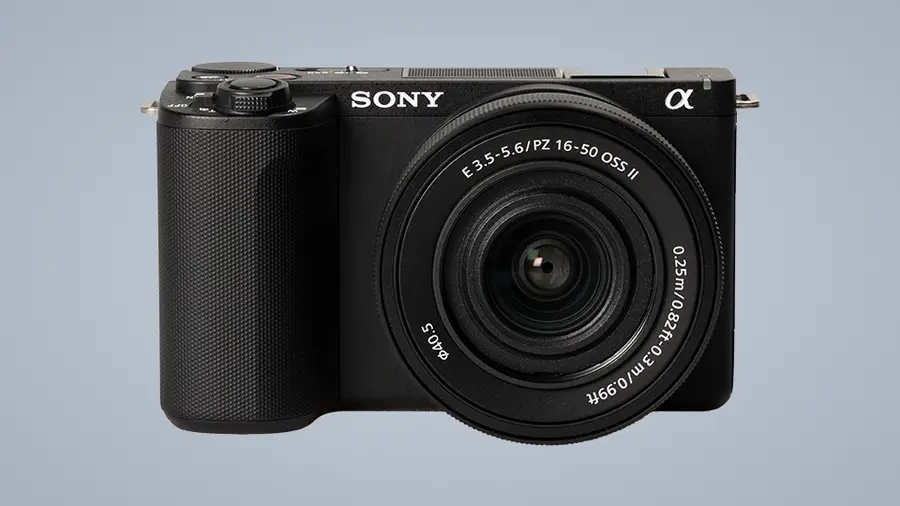
When Sony introduced the original ZV-E10, it quickly became a dominant force in the creator economy by offering interchangeable E-mount lenses, a lightweight crop-sensor body, and straightforward vlogging controls at an accessible price point. However, users frequently noted compromises: micro-USB ports, limited battery life from the smaller NP-FW50 pack, 8-bit recording limitations, and noticeable rolling shutter during pan movements. With the release of the Sony ZV-E10 II, Sony overhauled the internal architecture while preserving the compact form factor.
The ZV-E10 II brings professional-grade 10-bit color pipelines, S-Log3 gamma profiles, and an upgraded processing engine to a lightweight APS-C body. Below is our comprehensive review evaluating handling ergonomics, 4K video quality, autofocus reliability, stabilization limits, thermal management, and overall value. To inspect the broader lens ecosystem available for this camera, explore our master Sony E-mount system guide.
Quick Summary: Sony ZV-E10 II Key Specifications
Here is an itemized breakdown comparing the technical specifications and feature parameters of the Sony ZV-E10 II:
| Specification Parameter | Sony ZV-E10 II Technical Details |
|---|---|
| Sensor Format & Resolution | APS-C BSI CMOS Sensor (26.0 Megapixels Effective) |
| Image Processing Engine | BIONZ XR Processor with Dedicated AI Processing Unit |
| Maximum Video Resolution | 4K Over sampled from 6K up to 60p (with slight crop) |
| Color Depth & Sampling | 10-bit 4:2:2 All-Intra / Long GOP (S-Log3, S-Cinetone) |
| Autofocus System | 759 Phase-Detection Points with Real-Time AI Tracking |
| Image Stabilization | Digital Active SteadyShot + Gyro Metadata Stabilization |
| Battery Type | High-Capacity NP-FZ100 Lithium-Ion Battery Pack |
| Media Storage Card Slot | Single SD Card Slot (UHS-II Compatible) |
| Microphone & Audio | 3-Capsule Directional Mic + 3.5mm Mic & Headphone Jacks |
| Body Weight | Approx. 292 grams (Body only with battery and card) |
1. What Changed From the Original ZV-E10?
The transformation from the first-generation ZV-E10 to the ZV-E10 II is substantial. Most notably, the camera adopts the 26MP back-illuminated sensor and BIONZ XR processor from the FX30 and a6700, replacing the older 24MP front-illuminated chip. This upgrade unlocks 10-bit 4:2:2 internal recording, expanding dynamic range and enabling professional color grading using S-Log3.
Furthermore, physical power endurance has been doubled by switching from the legacy NP-FW50 battery to the much larger NP-FZ100 battery, solving one of the most common user complaints. The inclusion of a USB-C port supporting USB PD fast charging, improved menu layouts, and vertical video UI support make the ZV-E10 II a thoroughly modernized creator tool. For continuous news coverage and firmware updates, visit our dedicated Sony ZV-E10 II hub.
Search Sony ZV-E10 II Cameras & E-Mount Lenses
Check live stock availability, retailer pricing, and bundle packages across authorized camera stores:
Check Price on Amazon
Shop Sony at B&H Photo
Upgrade Tip: Recent firmware updates have unlocked even greater frame-rate flexibility! Read our report on how the Sony ZV-E10 II update unlocks 4K120 slow motion.
2. Design, Handling and Creator Controls
The ZV-E10 II maintains a compact form factor weighing just 292 grams, making it exceptionally easy to mount on gimbals, selfie sticks, or lightweight tripods. The handgrip has been redesigned with a deeper contour that accommodates the larger Z-battery while improving overall ergonomics during one-handed handheld vlogging.
Control layouts prioritize video creators: a dedicated photo/video/S&Q switch sits on the top plate, accompanied by a custom tally lamp, a multi-capsule directional microphone with an included deadcat windscreen, and a vari-angle touch-sensitive LCD screen. While it lacks an electronic viewfinder (EVF), the screen brightness is sufficient for outdoor daylight monitoring.
3. Video Quality: Detailed 4K and Useful 10-Bit Color
Video performance is where the ZV-E10 II truly shines. Over-sampled from a 6K sensor area without pixel binning, the 4K footage exhibits exceptional sharpness, fine textural detail, and well-controlled moiré. The addition of 10-bit 4:2:2 color depth allows colorists to push shadows and highlights in post-production without banding.
Picture profiles include S-Cinetone for gorgeous out-of-the-camera skin tones and S-Log3 for maximum dynamic range capture. Whether shooting casual travel logs or cinematic YouTube documentaries, the image quality rivals cinema cameras costing significantly more.
4. Autofocus Tracking and Stabilization Limitations
Equipped with 759 phase-detection autofocus points and a dedicated AI processing chip, the ZV-E10 II delivers reliable subject tracking. Eye AF for humans, animals, and birds locks on instantly and refuses to let go, even when subjects turn away briefly or walk past obstacles in the foreground.
However, stabilization is the camera’s primary real-world limitation. Lacking mechanical IBIS (In-Body Image Stabilization), the ZV-E10 II relies entirely on Digital Active Stabilization paired with gyro metadata recorded in-camera. While active stabilization smooths out minor hand tremors during stationary vlogging, walking shots introduce a noticeable digital crop and occasional warping artifacts along the frame edges.
To compare how this model stacks up against other crop-sensor rivals in the current market, explore our curated guide to the best APS-C mirrorless cameras.
5. Heat, Battery, Memory Cards and Audio
Thermal performance is well-managed for a compact body. Thanks to efficient heat dissipation and the larger battery compartment acting as a thermal sink, the camera handles extended 4K 30p recording without shutting down prematurely. The switch to the NP-FZ100 battery provides nearly triple the recording time of the original model, easily lasting through a full day of mixed shooting.
Storage relies on a single UHS-II SD card slot positioned in the battery compartment. For audio monitoring, the body includes both 3.5mm microphone input and headphone monitoring jacks, complemented by digital audio transmission via the Multi Interface Shoe.
6. Strengths, Pros, Limitations and Cons
| Strengths & Pros | Limitations & Cons |
|---|---|
| 26MP BSI sensor with exceptional 4K oversampling | Lacks mechanical IBIS (Relies on digital stabilization) |
| Internal 10-bit 4:2:2 recording with S-Log3 | No electronic viewfinder (EVF) included |
| High-capacity NP-FZ100 battery endurance | Single SD card slot |
| Lightning-fast AI subject tracking autofocus | Noticeable rolling shutter during fast pans |
| Compact, lightweight 292g body for gimbals | Micro-HDMI port instead of full-size HDMI |
7. Who Should Buy It vs. Who Should Skip It?
Who Should Buy It: Content creators, YouTubers, streamers, and travel vloggers upgrading from smartphones or first-generation ZV models who want professional 10-bit color, incredible autofocus, and all-day battery life without heavy gear.
Who Should Skip It: Run-and-gun documentary shooters who require robust mechanical IBIS for smooth handheld walking shots, or hybrid photographers who strictly prefer shooting through an electronic viewfinder.
Black Friday Content Creator Deals
Looking to upgrade your production setup with cameras, gimbals, wireless microphones, lights, and memory cards at discounted holiday prices? Explore our updated guide:
Explore Black Friday Content Creator Deals
Savings Alert: Check our holiday deal pages regularly for live price drops on camera bodies, zoom lenses, and high-speed storage!
Sony Black Friday Deals & Instant Savings
Looking to purchase Sony Alpha mirrorless camera bodies, E-mount zoom lenses, or audio accessories at promotional holiday pricing? Explore our updated guide:
Explore Sony Black Friday Deals
Savings Alert: Check authorized dealer promotion pages regularly for live price drops, instant rebates, and trade-in bonuses on Sony gear!
Compare authorized retail pricing, stock status, and official warranty bundles across top camera stores:
Search Sony Cameras on Amazon | Shop Gear at B&H Photo | Browse Store Deals at Adorama
Frequently Asked Questions (FAQ)
Frequently Asked Questions About the Sony ZV-E10 II
Q: Does the Sony ZV-E10 II have in-body image stabilization (IBIS)?
A: No, the ZV-E10 II does not feature mechanical sensor-shift IBIS. It relies on Digital Active Stabilization and gyro metadata to smooth footage.
Q: What battery does the Sony ZV-E10 II use?
A: It upgrades to the high-capacity **NP-FZ100 battery**, offering significantly longer recording times than the original model’s NP-FW50 pack.
Q: Does the ZV-E10 II record in 10-bit color?
A: Yes! It supports internal 10-bit 4:2:2 recording across S-Log3 and S-Cinetone profiles for professional grading flexibility.

See More DCN on Google
Add Daily Camera News as a trusted source to see our latest camera reviews, deal alerts, and photography news first in Google Search.
Explore Recommended Gear
Looking for the best cameras, lenses, and accessories? Check out our curated, hand-picked gear lists on Amazon.