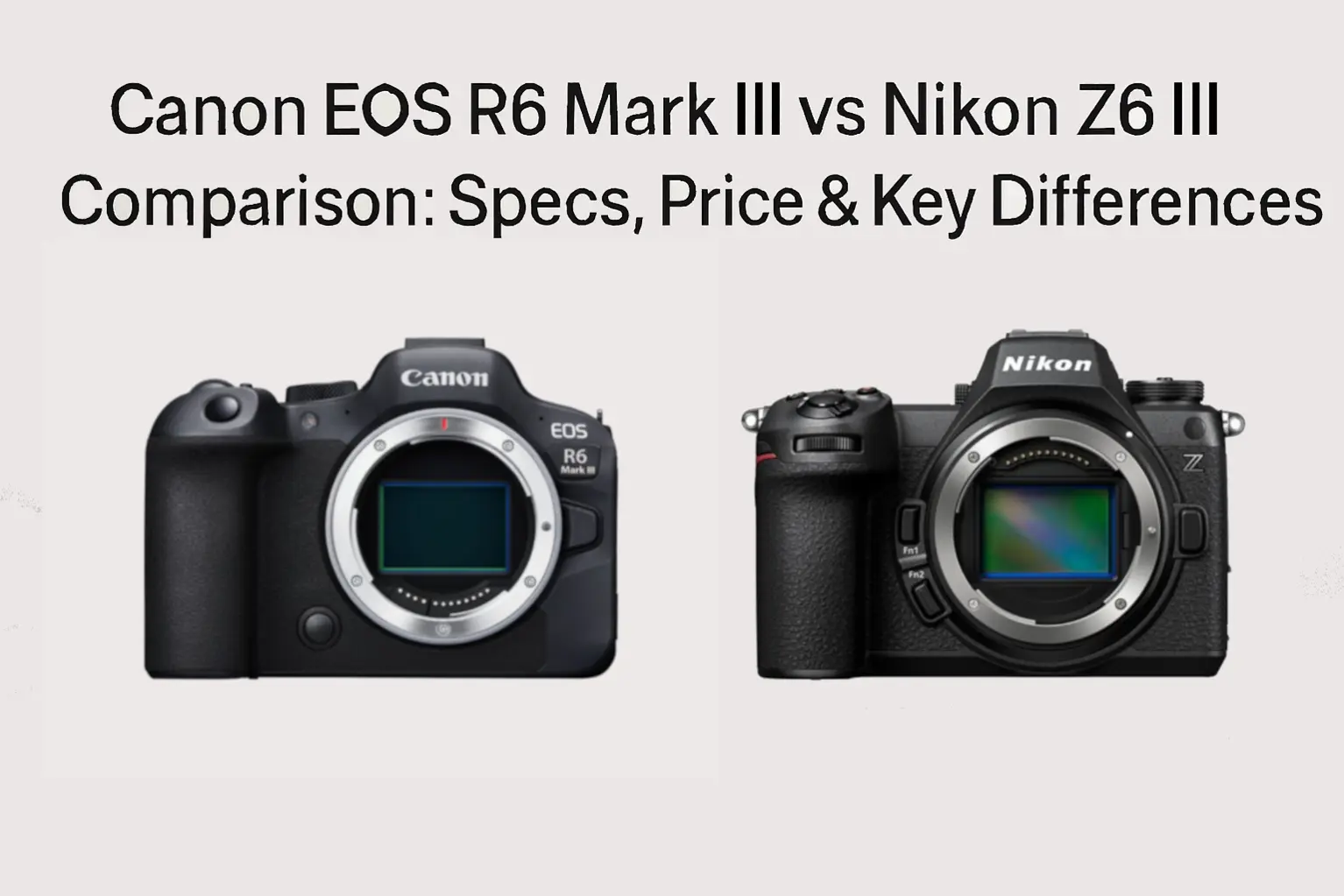
The Canon EOS R6 Mark III vs Nikon Z6 III comparison brings together two of the most anticipated full-frame mirrorless cameras in the current market. Positioned just below flagship models, both cameras are designed for serious enthusiasts and professionals who demand speed, reliability, and modern hybrid performance.
While the Canon EOS R6 Mark III focuses on delivering a balanced, photography-first experience with refined autofocus and proven ergonomics, the Nikon Z6 III takes a more forward-looking approach, emphasizing hybrid shooting and advanced video capabilities. On paper, their specifications may appear similar — but in real-world use, they are built for slightly different types of creators.
This detailed comparison examines not only technical specifications, but also price, long-term value, autofocus behavior, video reliability, handling, battery life, and overall usability. Whether you are upgrading from an older full-frame body or choosing your first serious mirrorless camera, this guide is designed to help you decide which model truly fits your shooting style and budget.
Canon R6 Mark III vs Nikon Z6 III: Decision Comparison Table
| Use Case | Canon EOS R6 Mark III | Nikon Z6 III |
|---|---|---|
| Autofocus Performance | ★★★★★ Extremely reliable subject tracking for photography |
★★★★☆ Fast and responsive, optimized for hybrid use |
| Low Light Photography | ★★★★★ Excellent noise control and AF confidence |
★★★★☆ Strong performance, slightly more video-oriented tuning |
| Video Reliability | ★★★★☆ Very solid, but not video-first |
★★★★★ Designed for long-form and hybrid video work |
| Hybrid Shooting | ★★★★☆ Photo-first with capable video tools |
★★★★★ True hybrid camera philosophy |
| System & Lens Ecosystem | ★★★★★ Mature RF ecosystem with broad lens options |
★★★★☆ Growing Z-mount, strong pro-grade optics |
| Long-Term Investment | ✅ Recommended Safe, future-proof choice |
⚠️ Depends Best if video is a priority |
| Best For | Photography-first users, events, wildlife Check current price |
Hybrid creators, videographers, content creators Check current price |
Top Improvements Over Previous Generations
Both cameras represent meaningful upgrades over their predecessors, but the focus of improvement differs clearly between Canon and Nikon.
- Canon EOS R6 Mark III: Canon refined its already strong platform with improved autofocus algorithms, better subject recognition consistency, and more efficient heat management. Overall system responsiveness feels more polished, especially for photographers who rely on dependable performance in fast-paced environments.
- Nikon Z6 III: Nikon took a more aggressive step forward, particularly in video processing and hybrid performance. Faster sensor readout behavior, improved video-focused autofocus logic, and a more confident hybrid shooting experience make the Z6 III a noticeably different camera from earlier Z6 generations.
Price & Value
From a pricing perspective, the Canon R6 Mark III and Nikon Z6 III sit in a similar full-frame mirrorless segment, but their value propositions differ based on how you shoot.
If your priority is maximum versatility for photography, the Canon R6 Mark III offers excellent value. See best lenses for the Canon EOS R6 Mark III.
If your focus is video-forward hybrid work, the Nikon Z6 III justifies its position with stronger video-centric features.
Sensor & Image Quality
When it comes to sensor performance and image quality, both cameras deliver excellent results, but their tuning reflects different priorities.
The Canon EOS R6 Mark III focuses on balanced image quality with strong dynamic range, pleasing color science, and reliable low-light output. It is particularly forgiving in challenging lighting conditions, making it a great choice for event and documentary-style photography.
The Nikon Z6 III, while equally capable in still photography, feels more optimized for hybrid workflows. Its sensor behavior and processing pipeline are clearly designed to support advanced video features while maintaining high-quality still images.
Autofocus & Performance
Autofocus performance is a key deciding factor in this comparison. Canon continues to focus on consistency and reliability, especially for photography, while Nikon pushes speed and responsiveness for both stills and video.
The Canon R6 Mark III excels in subject tracking stability, making it a strong choice for events, weddings, and wildlife photography. The Nikon Z6 III, on the other hand, feels more aggressive and responsive, particularly in hybrid shooting scenarios.
Video Capabilities
This is where the split decision becomes clear. The Nikon Z6 III leans more heavily into video with enhanced recording options, smoother workflow integration, and a design philosophy clearly aimed at hybrid creators.
The Canon R6 Mark III is still very capable for video, but its strengths shine more in photography-first use cases where video is secondary rather than the main focus.
Handling & Usability
Canon’s ergonomics remain one of its strongest assets. The R6 Mark III feels immediately familiar, with intuitive button placement and menus that minimize the learning curve.
Nikon’s Z6 III counters with excellent customization, a robust body design, and a refined electronic viewfinder experience, making it appealing to users who like to fine-tune their controls.
Battery Life & Connectivity
Both cameras deliver solid real-world battery performance for full-frame mirrorless systems. USB-C charging, wireless connectivity, and modern file transfer options make each camera suitable for contemporary workflows.
Neither model dramatically outperforms the other here, so this category is largely a draw depending on your existing ecosystem.
Who This Camera Is For
Canon EOS R6 Mark III is best for:
- Photographers prioritizing reliability and autofocus consistency
- Wedding, event, and portrait shooters
- Users invested in the Canon EOS R system
Nikon Z6 III is best for:
-
- Hybrid creators who shoot both photo and video regularly
- Content creators and videographers
- Users looking for a modern, video-forward full-frame mirrorless camera
- See best lenses for the Nikon Z6 III
Bottom Line
The Canon R6 Mark III vs Nikon Z6 III comparison is not about which camera is objectively better — it’s about which one better matches your shooting priorities.
If you want a balanced, dependable full-frame mirrorless camera with excellent autofocus and ergonomics, the Canon R6 Mark III is the safer and more traditional choice. If your workflow leans toward video and hybrid content creation, the Nikon Z6 III offers a more forward-looking feature set.
Ultimately, both cameras represent strong value in their price range, and your final decision should be guided by how you actually shoot — not just the spec sheet.
FAQ: Canon EOS R6 Mark III vs Nikon Z6 III
- Which camera is better for hybrid photo and video shooting?
- The Nikon Z6 III is the stronger choice for true hybrid shooting, offering a more video-focused feature set while still delivering excellent photo performance. The Canon R6 Mark III leans more toward photography-first users who occasionally shoot video.
- Is the Canon EOS R6 Mark III better for photography?
- Yes, for photography-focused users the Canon EOS R6 Mark III offers more consistent autofocus behavior, reliable subject tracking, and a forgiving shooting experience in challenging conditions such as events and low light.
- Which camera is better for video creators in 2026?
- In 2026, the Nikon Z6 III is better suited for video creators thanks to its hybrid-oriented design, improved video processing, and more confident performance during extended recording sessions.
- Is the Canon EOS R6 Mark III worth the higher price?
- The Canon EOS R6 Mark III is worth the higher price if your priority is photography reliability, autofocus consistency, and long-term usability within the Canon RF ecosystem. For video-first users, the Nikon Z6 III often delivers better value.
- Which camera is more beginner-friendly?
- The Canon EOS R6 Mark III is generally more beginner-friendly due to its intuitive menus, familiar ergonomics, and straightforward shooting experience. The Nikon Z6 III offers deeper customization but has a slightly steeper learning curve.
- Which camera is the better long-term investment?
- Both cameras are solid long-term investments, but for different users. Canon offers a more mature lens ecosystem and broader third-party support, while Nikon’s Z6 III is a compelling choice for creators who expect to focus increasingly on video and hybrid work.